Syria: What to Do Now

26 Feb


            There is a new mood of moral desperation associated with the ongoing strife in Syria that has resulted in at least 135,000 deaths, 9.3 millions Syrians displaced, countless atrocities, Palestinian refugee communities attacked, blockaded, and dispersed, and urban sieges designed to starve civilians perceived to be hostile. As the second round of negotiations in Geneva-2 ended as fruitlessly as the earlier round, there is a sense that diplomacy is a performance ritual without any serious intent to engage in conflict-resolving negotiations. Expectations couldn’t be lower for the as yet unscheduled, but still planned, third round of this Geneva-2 process.


The Damascus regime wants an end to armed opposition, while the insurgency insists upon setting up a transition process that is independently administered and committed to the election of a new political leadership.The gap between the parties is too big, and getting bigger, especially as the Damascus government correctly perceives the combat tide as turning in its favor, leading the main opposition forces seemingly to seek to achieve politically and diplomatically what they appear unable to do militarily. Also, it is unclear whether the opposition presence in Geneva has the authority to speak on behalf of several opposition groups in the field in Syria.


In light of these frustrations it is not surprising to observe an acrimonious debate unfolding between American interventionists who believe that only force, or at least its threat, can thread the needle of hope. The interventionists, invoking the responsibility to protect norm that was used effectively to mobilize support in the Security Council to mandate a no fly zone in Libya back in 2011, suggest that such an approach should be used again in 2014 either to establish a no fly zone opening a corridor that will allow humanitarian aid to flow to besieged cities or to achieve regime change in Syria as the only way to end the ordeal by ridding the country of a governing process guilty of repeated mass atrocities against its own people.


The anti-interventionists point out that the Libyan precedent of 2011 is tainted by the deliberate expansion of the humanitarian scope of what was authorized by the UN Security Council to undertake a much wider campaign with the clear intent of regime change, which in fact ended with the capture and execution of Qaddafi, then the head of state in Libya. It is also somewhat tarnished by the post-Qaddafi realities of widespread militia violence and the failure to develop a coherent and legitimate governance structure. The anti-interventionist argue that introducing external military force almost always makes matters worse, more killing, more devastation, and no politically sustainable outcome, and there is no good reason to think this will not happen in Syria. Furthermore, without a Security Council mandate such a use of military force would once again be undertaken in violation of the UN Charter and international law as it could not be justified as self-defense.


Providing humanitarian relief in a situation mainly free of internal political struggle should be sharply distinguished from the realities amid serious civil strife. The response to the Somali breakdown of governability during the presidency of George H. W. Bush in 1992, is illustrative of a seemingly pure humanitarian response to famine and disease characterized by a posture of political non-interference and by the shipment of food and medical supplies to a people in desperate need. This contrasted with the supposedly more muscular response to a troubled Somalia during the early stages of the Clinton presidency in 1993 when the humanitarian mission was fused with anti-‘warlord’ and political reconstruction goals. Difficulties soon emerged as robust national armed resistance was encountered culminating in the Blackhawk Down incident that resulted in 18 deaths of American soldiers, prompting an almost immediate American pullout from Somalia under a cloud of intense criticism of the diplomacy of ‘humanitarian intervention’ within the United States. This had the disastrous spillover effect of leading the supposedly liberal Clinton White House to discourage even a minimal humanitarian response to the onset of genocide in Rwanda in 1994, which might have saved hundreds of thousand of lives.  In the Rwanda context the United States Government even discouraged a modest upgraded response by the United Nations that already had a peacekeeping presence in the country, and whose commander urged reinforcements and authority to protect the targets of genocidal massacres. This failure to act in Rwanda remains a terrible stain on America’s reputation as a humane and respected world leader, and is frequently interpreted as a racist disregard of threats confronting an African population when no major strategic interest of Western countries were present on the side of the victims.


The Syrian reality since its inception was dominated by a political uprising, later an insurgency, demanding regime change in Damascus.  It was also beset with a leadership deficit and by factionalism that only became worse with the passage of time. It was further complicated and confused by its proxy dimensions, both in relation to the supply of arms and with respect to diplomatic alignment.


The humanitarian relief argument to be credible, much less persuasive, needs to deal with the complexities of Somalia 2, and not act as if the humanitarian response can be addressed in detachment from the political struggle as was the case in Somalia 1. When political objectives become intertwined with a humanitarian rationale, forces of national resistance are activated on the reasonable assumption that the real goal of the mission is the political one, and the humanitarian relief is being used as a cover. As we can foresee, this complexity makes for a stiffer climb facing an advocate of humanitarian intervention in the current Syrian tragedy. There exists a more difficult burden of persuasion, although not an impossible one. Indeed, against the background of recent failed interventions, every proposed intervention confronts such a burden at some level. The Syrian case makes this burden more formidable, given the record of past interventions in the region and considering the mixture of forces that make up ‘the opposition,’ which is so far from unified even in carrying on the struggle against the Assad regime, on occasion diverting attention to take action against a rival faction.


In fact, the Syrian situation has an originality that makes the Somalia template clarifying, but hardly definitive. The Syrian political struggle is more acute and vicious than was the case in Somalia 2. Also the humanitarian crisis is deeper and the plight of many Syrians caught in the maelstrom of this horrifying war that is both internal and contains regional proxy elements in ways that make it more confusing as to the probable effects of threats and uses of force on behalf of genuine humanitarian goals.


My basic contention is that there are no easy answers at this stage as to what should be done about the Syrian situation, and dogmatic discourse for or against intervention misses the deeply tragic nature of the policy predicament for all political actors. I would feel more comfortable about the intervention debate if it were expressed in a discourse that accords prominence to the virtue of humility. Too much in Syria remains unknowable to have any confidence that a clear line of advocacy will be historically vindicated.


For me the fundamental question is what it is best to do or not do in such a desperate situation of radical uncertainty. It is not only that the interventionists, and perhaps the anti-interventionists are motivated by a convergence of humanitarian/moral considerations with geostrategic ambitions, but that the nature of these hidden calculations are discussed in governmental circles behind locked doors and transcribed in secret policy memoranda. Until we address these questions of consequences and secret goals in the context of uncertainty and unknowability, the public discourse on what to do about Syria offers limited insight into how best to evaluate policy options being endorsed by policymakers and leaders. I hope that such a discussion will ensue, and replace the rather pointless and dogmatic self-righteous indignation of both interventionists and anti-interventionists.


I remember hearing the senior State Department diplomat, George Ball, speak just weeks after he left the government in the closing years of the Vietnam War. His primary message was that he only began to understand the war when he stopped reading the cables, that is the secret highly classified messages being sent by the military commanders and their civilian counterparts in the war zone. In effect, rather than make policy more transparent its counter-intuitive reality was to shroud the reality of Vietnam in greater obscurity. It is easy to explain why. Those in the field were committed to achieving victory, and were determined to provide reassurance, however false, to the leaders back in Washington so that they could deal with growing anti-war pressures that were a combination of public fatigue after almost a decade of engagement  and skepticism based on what became known as ‘the credibility gap’ between the claims of continuing progress in the war and what was actually taking place in Vietnam.  


A Meeting with Ayatollah Ruhollah Khomeini 35 Years Ago

9 Feb


Exactly thirty-five years ago I had the experience of a lengthy meeting Ayatollah Ruhollah Khomeni in his tent where he received visitors in the Paris suburb of Neuphle-le-Chateau. It was several days preceding his triumphal return to Iran after almost 14 years of exile, mostly spent in Najaf, Iraq. I was returning to the United States after spending two weeks in Iran during the turbulent final stage of the revolution in Iran that was on the verge of victory. My presence in Iran was in response to an invitation from Mehdi Barzargon. 


I was accompanied by Ramsey Clark the former American Attorney General, and still then a prominent although controversial political figure in the country, and Philip Luce, a highly respected leader of a religious NGO who had distinguished himself by much publicized nonviolent civil initiatives of opposition to the Vietnam War. At the time, I was chair of a small American committee opposed to American intervention in Iran, and it was the activities of this group that I assume led to the invitation to get a first-hand look at the revolution. We met with a wide spectrum of Iranian religious and secular personalities, including the Shah’s last prime minister, Shapour Bakhtiar, and the notorious counter-insurgency diplomat, William Sullivan, who was appropriately the last American ambassador to Iran (there have been no diplomatic relations with Iran since 1979). While we were in Iran, the Shah left the country signaling the end of his monarchy, which occasioned at the time the largest mass display of joy that I have ever witnessed, with millions peacefully marching on the streets of Tehran in a festive mood. It was a remarkable outcome of this almost completely nonviolent challenge mounted against what had been considered one of the strongest military regimes on the entire planet and enjoyed the undivided support of the United States that had major strategic assets (surveillance capabilities in relation to the Soviet Union and a large detachment of military forces in several large bases).


Leaving the turbulent scene in Iran, and having the opportunity to meet with Ayatollah Khomeini climaxed this experience of touching the living tissue of revolution. In Iran, with crowds chanting his name and carrying posters bearing his image, it was clear that Khomeini was the iconic inspiration of the revolution that had unexpectedly managed to gain a victory over the Shah. We had little sense, however, of the sort of future Khomeini envisioned for himself or what his hopes were for the revolution. What was obvious from the moment we were seated cross-legged on the ground within his tent was the strength of his arresting presence, especially his shining eyes that seemed almost black.


What struck us immediately was his active mind and sharp intelligence. He wanted to know what we thought were American intentions now that the Shah was gone, and given the CIA role in the 1953 events that restored the Shah to power, whether the United States was ready to respect the outcome of Iran’s revolution. In turn, we asked about his hopes for the ‘Iranian Revolution.’ His response fascinates me to this day. First of all, he immediately corrected us insistently pointing out that what had just been completed was ‘an Islamic Revolution,’ that is, asserting as primary an identity associated with religious and cultural affinities rather than emphasizing the nationalist agenda of regime change that was the common way of interpreting what had happened in Iran. Khomeini went on to say that the importance of the unfolding of events in Iran related to the entire region, and subsequent history vindicated this expectation of regional transformations. Prefiguring the future tensions in the region, Khomeini spoke disparagingly about the Saudi Arabian dynasty, calling it ‘decadent’ and out of touch with its people. His emphasis was on the unacceptability of monarchy rather than on what was later emphasized by way of sectarian tendencies between Shi’a and Sunni tendencies in Islam.


Khomeini, then, explained his own role in Iran, saying that he entered the political domain because the Shah had “created a river of blood between himself and the people.” He added that he was looking forward to “resuming the religious life” upon his return to Iran, and would leave the governing process to others outside of the religious community, but drawn exclusively from the ranks of the religiously oriented supporters of the revolution. At first, as we know, Khomeini resumed his residence in Qom, a religious city filled with madrasas (or seminaries), but as the new leadership seemed to falter, his political role became more and more pronounced. By the time of the hostage crisis in late 1979, the radicalization and theocratic nature of the new political order became manifest, and Khomeini himself emerged as ‘the supreme guide,’ with the elected political leadership discharging the functions of government, but subject to his veto and vision.


There were other important pronouncements made during the meeting. We asked about the fate of minorities, specifically, Jews and Baha’i’s, who were seen as aligned with the Shah, and in jeopardy. Khomeini’s response was thoughtful, and suggestive of what would follow. He said, “For us, the Jews are an authentic religion of the book, and if they are not too entangled with Israel, they are most welcome in Iran, and it would be a tragedy for us if they left.” In contrast, “the Baha’i’s are not a genuine religion, and have no place in Iran.” Such attitudes did foreshadow both the hostile confrontation with Israel that intensified over the years, and the discriminatory approach taken toward the Bahai’s that at one stage approached a genocidal threshold. Both minorities felt uncomfortable living in an Islamic theocracy, and if they possessed the resources, mainly emigrated to friendlier national habitats.


Khomeini spoke at some length about the crimes of the Shah’s government, and the responsibility of its political entourage, suggesting the importance of individual accountability. He mentioned the Nuremberg trials of surviving Nazi political figures and military commanders after World War II as a useful precedent that would underpin the approach taken by the new Iranian leadership toward those who had carried out the repressive policies of the Shah, which included widespread torture and massacres of unarmed demonstrators.


As we know, this Nuremberg path was never taken by the new Iranian rulers.  The most prominent members of the inner circle of the Peacock Throne who had not fled the country were summarily executed without either indictments or trials. This was aptly treated by the outside world as an indication that the new governing process in Iran would turn out to be repressive and contemptuous of the rule of law. After the fact, it seemed rather obvious why the regime resorted to rough justice. Many of those who had shaped the revolutionary process had studied in Europe or America, and were recipients of economic assistance from Western governments, included funding from the CIA, and maybe performed political roles. Remember that during the Cold War era, Islamically oriented groups and individuals were looked upon as valuable allies in the West. This was due in Iran to their deep dislike of Marxism and the Soviet Union. Sullivan informed us during our visit to the American Embassy that Washington had prepared 26 scenarios of potential political dangers for the Shah, and not one of them had posited Islamic opposition as a threat.


Reflecting on this meeting more than three decades ago several strong impressions remain. First, the almost archetypal reality of Khomeini as the embodiment of an Islamic religious leader, who despite a physical frailness, exhibited great strength of mind and will combined with a demeanor of austere severity. Secondly, his vision of an Islamic political future that was rooted in religious and civilizational affinities rather than based on national borders. Thirdly, the discrepancy between his assertions that upon returning to Iran he would resume the pursuit of his religious vocation and his emergence as the dominating political figure who moved from Qom to Tehran to preside over the drafting of a new and suppressive theocratic constitution and the formation of the government.


I have thought often, especially about this last observation, and discussed its core mystery with friends. This remains my question: did Khomeini change the conception of his role upon returning to Iran, or did he hide from us either consciously or unconsciously his real game plan? As far as I know, no one has provided a credible explanation. It may be that Khomeini during his long exile underestimated his popularity in Iran, which he reassessed after receiving such a tumultuous welcome when he returned or that he found that the liberal Islamists (such as Bani Sadr, Barzargon, Ghotbzadeh) he was relying upon to manage the government were not committed to the kind of revolutionary future that he believed to be mandated by the Iranian people or upon his return he was pushed by other imams ‘to save the revolution’ from this first wave of post-Shah politicians who had mainly lived in the West and were not trusted in Iran. However such issues are resolved, it is clear that the Islamic Republic that emerged in Iran resembled the kind of ideal design of Islamic government that Khomeini had depicted in a series of lectures on ‘Islamic Government,’ which was published in 1970.


There is one further reflection that bears on the present course of events in the Middle East in this period three years after the Arab Spring. Khomeini by insisting on all or nothing in the struggle against the Shah did create a transformative moment in which an Iranian transition to a truly new political order took place. In contrast the 2011 militants in Tahrir Square were content with the removal of the despotic leader and some soft promises of democratic reforms, and ended up succumbing to a counter-revolutionary tsunami that has reconstituted the repressive Mubarak past in a more extreme form. This does not imply that what has unfolded in Iran was beneficial, only that it was a decisive break with the past, and in this crucial sense, ‘revolutionary.’ In this respect, Ayatollah Khomeini was a true revolutionary even if his goal was to turn the clock back when it came to modernity, including secular values.


OMAR: Uncovering Occupied Palestine

4 Feb


            OMAR is the second film directed by Hany Abu-Assad to be a finalist among foreign language films nominated to receive an Oscar at the 2014 Academy Awards ceremony on March 2nd. The earlier film, PARADISE NOW (2005), brought to life the preoccupation at the time with suicide bombing as the principle tactic of Palestinian resistance by exposing the deep inner conflicts of those who partake, the tragic effects of such terror on its Israeli targets, and the hardened manipulative mentality of the leaders who prepare the perpetrators. Abu-Assad born in 1961 in Nazareth, emigrated to the Netherlands in 1980, writes the screen plays for his movies as well as directs. He has a profound gift for story telling that keeps an audience engaged with the human drama affecting the principal Palestinian characters while illuminating broader issues of profound moral and political concern without stooping to didactic means of conveying ‘the message.’ So understood, Abu-Assad’s achievement is artistic in the primary sense, yet attunes us to the dilemmas of oppression and servitude.


            In these respects OMAR is superior even to PARADISE NOW, telling the story of what life under Israeli occupation means for the way Palestinian lives are lived, the normalcy’s of romantic attraction contrasting with the abnormalities of humiliating lives lived behind prison walls. The film opens with Omar climbing the high domineering security wall to overcome the separation of Arab families living on either side, being detected by the Israeli guards who sound sirens and fire a shot. Omar manages to clamor back down and leap to safety. Israeli police on foot and in cars pursue Omar through the alleyways and streets of an impoverished Palestinian neighborhood. The underlying poignancy of Omar’s situation is to be at once ‘a freedom fighter’ and a sensitive young man deeply in love with Nadia, the younger sister of Tarek, his militia commander. In an unspoken realism, Omar is unconditionally bound to both causes, jeopardizing his chance to live a shadow life of acquiescence to the realities of occupation by his choice to dedicate himself at great risk and little hope to the liberation of the Palestinian people and their land.


            The wall reinforced by the Israeli security forces, portrayed as cunning and unscrupulous, with an occupiers’ fear and loathing for those who cower under the rigors of occupation, provides an unforgettable visual metaphor that captures the daily ordeal of the Palestinian people. In a subtle touch, the rope used by Omar throughout the film to avoid the checkpoints and overcome the separation of his home from that of Tarek and Nadia also conveys an understanding that the wall is much more about humiliation and land than it is about security. The rope remains untouched during the entirety of the film, although its presence and illegal use must have been obvious to the Israeli occupation forces that never bother to remove it.


            What emerges most vividly as the story unfolds is the dehumanizing effects of prolonged occupation. Omar and Nadia have charm and humor to give their love for another an unforgettable credibility that is brought to life by their awareness of what it means to live without the right to travel beyond the wall. They talk in the language of fantasy about where to go on their honeymoon: he proposes Mozambique, she counters with Bangla Desh, and then more truly, admits that Paris is her dream, while they both fully realize that they will never get the opportunity to get beyond the dingy confines of the West Bank. Nadia’s biggest trip outside of her immediate neighborhood was a visit to Hebron, the tensest, most humiliated city in occupied Palestine, notorious for daily settler violence against the large residentPalestinian community.


            The film conveys better than any book the interactive intimacies of occupier and occupied. The Israeli lead security agent, Rami, calls his mother to ask her to pick up his daughter from school, and when she asks why he can’t do it, he responds “I am stuck in the middle of the fucking West Bank.” Yet the most abiding realization is the horrible dehumanizing effects of this mixture of fear and hatred in contexts of unspeakable inequality, with total control seemingly on one side, and complete vulnerability on the other side. The torture scenes, like the wall, are both horrible in their own enactment, but also metaphors of what it means to live your entire life within master/slave structures of relationship.


            The reality of Palestinian violent resistance has two important consequences even though it seems currently futile from the perspective of challenging the occupation in any way that promises to liberation: it gives dignity to Palestinians who seem united in their will to live-unto-death despite their defenselessness and it makes Israelis vulnerable despite their seeming total control of the situation as a result of their weaponry, police, surveillance technology, and arrogant sense of racial superiority. In effect, the desperate slave when life is deprived of all personal meaning can sacrifice himself in a symbolic act of vengeance, and inflict pain and loss on the master. Seen from an Israeli perspective, there is no way to achieve total security (this side of total genocide) no matter how clever, sophisticated, and oppressive the systems of control put in place. Technology is incapable of doing the whole job, and for this reason, human fallibility always produces some sort of payback from the incompletely vanquished subjugated population.


            For this reason, from the Palestinian side, nothing is worse that becoming a collaborator, and yet only a hero among heroes, would have the super-human capacity to avoid such a fate given the brutality used by Israelis to acquire the information they need to enforce their will on a hostile population. For the occupier recruiting collaborators is a vital part of improving security; for the occupied, it is the final humiliation, making the fate of the traitor far worse than that of the slave. Omar is portrayed in a fascinating manner because he succumbs, and yet in the end he doesn’t succumb. Amjad, his friend collaborates with the Israelis to steal Omar away from Nadia, with the biopolitical insight that romantic longings may take lethal precedence over political loyalty and lifelong friendship. In this respect, the power of love is greater than the power of power. The film also is faithful to the traditional social norms that bind Palestinians to family relations in ways that also enslave, including the total disempowerment of women. Nadia is portrayed as strong in her dual attachments to love and resistance, and yet is deprived by Palestinian norms of freedom in relation to her body and choice of partner. In this sense, Nadia is doubly occupied.


            OMAR makes no effort to depict the larger issues of resistance tactics, to portray some vision of a realizable peace, or to bring into play the behavior of politicians, the UN, the international community. Such considerations are ignored, and seem irrelevant to the forces that impact daily on Palestinian lives. It takes the present as a seemingly permanent given, in effect, a society of prisoners sentenced for life with no hope for parole or escape. So understood, the actual Israeli prison that is depicted in the film is a prison within a prison, that is, a walled enclave that exists within a walled country.


            The great achievement of Hany Abu-Assad in this film is to make you feel and think, and maybe hopefully act. I left the theater with the overriding sense that the continuation of this occupation is intolerable for both sides, that it dehumanizes Israelis as much as it does Palestinians, two peoples caught in a vicious circle of subjugation and resistance. But not equally so caught as the masters live life in more satisfying ways than the slaves, at least for now, at least until the walls come tumbling down.


Imperiled Polities: Egypt and Turkey—Two Visions of Democracy

25 Jan


The Meaning of a 98.1% Vote


In mid-January there was a vote in Egypt as to whether to approve a constitution drafted by a 50-person committee appointed by the interim government put in place after the military coup carried out on July 3, 2013. The constitution was approved by 98.1% of those who voted, 38.6% of the eligible 53 million Egyptians. This compares with 63.8% support received by the constitution prepared during the presidency of Mohammed Morsi from the 32.9% of the Egyptian citizenry that participated in the vote. It should be observed that this new constitutional referendum was boycotted by both the Muslim Brotherhood and various of the youth groups that has been at the forefront of the anti-Mubarak upheaval in 2011. Also the validity of the vote was further discredited because of the atmosphere of intimidation in Egypt well conveyed by the pro-coup slogan: “You are either with me or with the terrorists.” Not only had the MB been criminalized, its assets seized, its leaders jailed, its media outlets shut down, but anyone of any persuasion who seemed opposed to the leadership and style of General el-Sisi was subject to arrest and abuse.


In the background here are questions about the nature of ‘democracy,’ and how to evaluate the views of people caught in the maelstrom of political conflict. On one level, it might seem that a vote of over 90% for absolutely anything is an expression of extraordinary consensus, and as a result el-Sisi’s constitution is far more popular than Morsi’s constitution, and hence more legitimate. Reflecting on this further makes it seem evident, especially when the oppressive context is to taken into account that the one-sided vote should be interpreted in the opposite manner, making Morsi’s vote more trustworthy because it reached plausible results. Any vote in a modern society that claims 98.1% support should be automatically disregarded because it must have been contrived and coerced. In effect, we cannot trust democratic procedures to reveal true sentiments in a political atmosphere that terrorizes its opponents, and purports to delegitimize its opposition by engaging in state crime. The consent of the governed can only be truly ascertained if the conditions exist for the free and honest expression of views for and against what present power-wielders favor.


Maybe, however, the connections made between democracy and legitimacy, seeking this populist signal of approval by the ritual of a vote, is itself a kind of blindfold. It would seem that a majority of Egyptians did, in fact, welcome the el-Sisi coup, believing that a military leadership would at least ensure food and fuel at affordable prices and restore order on the streets. In other words, most citizens in crisis situations posit order and economic stability as their highest political priorities, and are ready to give up ‘democracy’ if its leaders fail to meet these expectations. In my view, what has happened in Egypt is the abandonment of the substance of democracy by the majority of the Egyptian people, as reinforced by the suppression of a minority hostile to the takeover. This dynamic is hidden because the discourse and rituals of democracy are retained. It is this process that I believe we are witnessing as unfolding in Egypt. In effect, polarization of the first two-and-half years following the overthrow of Mubarak has been followed by the restoration of autocratic rule, but due to the intervening embrace of political freedom, however problematic, the new autocrat is even harsher than what was rejected at Tahrir Square three years ago.


The Politics of Polarization and Alienation  


Amid this political turmoil that has been spoiling the politics of the Middle East is a conceptual confusion that contributes to acute political alienation on the part of those societal elements that feel subject to a governmental leadership and policy agenda that is perceived as hostile to their interests and values. Such circumstances are aggravated by political cultures that have been accustomed to ‘one-man shows’ that accentuate tendencies toward adoration and demonization. Each national situation reflects the particularities of history, culture, values, national memories, personalities, and a host of other considerations, and at the same time there are certain shared tendencies that may reflect some commonalities of experience and inter-societal mimicry, as well as the deformed adoption of Western hegemonic ideas of modernity, development, constitutionalism, and governance, as well as of course the relationship between religion and politics.


The recent disturbing political turmoil in Turkey and Egypt, each in its own way, is illustrative. In both countries there are strong, although quite divergent, traditions of charismatic authoritarian leadership, reinforced by quasi-religious sanctification. Very recently, however, this authoritarian past is being challenged by counter-traditions of populist legitimacy putting forward impassioned demands for freedom, integrity, equity, and inclusive democracy, which if not met, justify putting aside governmental procedures, including even the results of national elections. Within this emergent counter-tradition is also a willingness to give up all democratic pretensions so as to restore a preferred ideological orientation toward governance, that is, resorting to whatever instruments are effecting in transferring control of the state back to the old order that had lost control of the governing process by elections, and had poor prospects of democratically winning power in the future.


In Egypt, this circumstance led to unconditional opposition to the elected leadership, especially to Mohammed Morsi, the president drawn from the ranks of the Muslim Brotherhood. The aim of this opposition, whether or not consciously espoused, seemed to have been to create a crisis of governability of sufficient depth to provoke a crisis of legitimacy, which could then produce a populist challenge from below that brought together ideological demands for a different orientation and material demands for a better life. It is true that Morse lent a certain credibility to this rising tide of opposition by a combination of incompetence and some clumsy repressive moves, but this was almost irrelevant as his secular and fulool opponents wanted him to fail and never allowed him even the possibility of success. For such opponents, the idea of living under a government run by the MB was by itself intolerable. In the end, many of those who had pleaded so bravely for freedom in Tahrir Square were two years later pleading with the armed forces to engage in the most brutal expressions of counter-revolutionary vengeance. Whether this will be the end of the Egyptian story for the near future is difficult to discern, the downward spiral suggests insurrection and strife for the foreseeable future.  


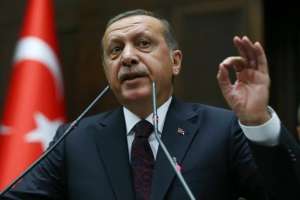
In Turkey, such a collision has recently produced turmoil and highlighting the dangers and passions that accompany lethal polarization, initially, in the encounters of the summer of 2013 at Gezi Park and some months later in a titanic struggle between Tayyip Recip Erdogan and Fetullah Gulan generating a rising tide of mutual recriminations and accusations that threatens the AKP dominance of the political process, a threat that will be soon tested in the March local elections, especially those in Istanbul and Ankara. Turkey is different than Egypt in at least two major respects. First of all, its economy has flourished in the past decade, producing a rising middle class, and a business community with lots to lose if investor confidence and currency exchange rates decline sharply. This reality is complicated by the fact that part of those that have gained economically have been aligned with the AKP, and by the degree to which the Turkish armed forces are also major stakeholders in the private sector. Secondly, a major achievement of the AKP leadership has been to depoliticize the role of the Turkish military, partly to protect itself against interference and partly to satisfy European Union accession criteria.


Alienation and emotional distress is more a symptom than an explanation of why there exist such strong political tensions. Better understood, these conflicts are about class, religion, status, political style, the benefits of governmental control, and availability of capital and credit. An additional source of public antagonism is the unresolved, and mostly unacknowledged, debate about the true nature of democracy as the legitimating ideal for good governance in the 21st century. One perplexing element is language, especially its use by politicians concerned with public opinion. There is this impulse on one side to base governmental legitimacy on pleasing the citizenry, and the impulse on the other side is to insist upon fidelity to law and constitutionalism. Both sides have powerful arguments that can be invoked to support their claims. There is no right and wrong, which is infuriating for polarized discourse that can only raise its voice to shout in higher decibels, but can never reach a conclusion of the sort that might resolve a scientific debate or solve a mathematical puzzle. Each side is motivated by unshakeable convictions, and has no disposition to listen, much less appreciate, what the others are saying. In effect, good governance is impossible in the absence of community, and what has become evident is that society unity is currently unattainable in the presence of the sort of alienation that has gripped the publics in Egypt and Turkey, and elsewhere. 


Part of the controversy, but only part, can be reduced to these differences over the very nature of democracy. Another part, as discussed in relation to the vote on the Egyptian constitution, involves the abandonment of democracy in substance while insisting on its retention in form.


Varieties of Democracy


The word democracy itself needs to be qualified in one of two ways: majoritarian or republican. And here is the central tension: the public myth in all countries that deem themselves ‘modern’ endorse the republican tradition of limited government and internal checks and balances, while the political culture is decidedly ambivalent. It can spontaneously legitimize the majoritarian prerogatives of a popular leader with strong backing on the street and among the armed forces, even at the cost of republican correctness. Because of this reality, there exists a tendency by those social forces being displaced through societal power shifts to view a newly ascendant leader through a glass darkly. They suddenly lament authoritarian tendencies that never troubled them in the past when their elites held the reins of governmental authority. Part of the recent confusion is that sometimes the authoritarian tendency gets so corrupted that it loses support even among those who share its class and ideological outlook, and a reformist enthusiasm emerges. This happened in Egypt, but its tenure was short lived as its adherents, drawn from the ranks of the urban educated elites, quickly realized that their interests and values were more jeopardized by the ‘new’ order than it had been by the excesses of the ‘old’ order. 


We find in Egypt this pattern played out through the wildly gyrations in the perception of the armed forces as a political player. In the Mubarak Era the armed forces were the central pillar of the state, and a major beneficiary of governmental corruption, neoliberal inequities, and a principal perpetrator, along with other security forces, of state crime. In the Morsi period of governance the armed forces seemed to stay in the background until either responding to or prompting the populist mandate of the opposition exhibited by mass demonstrations and media mobilization based on a paranoid image of Muslim Brotherhood rule and widespread genuine distress about economic stagnancy and political disarray.


After the July 3rd coup led by Morsi’s Minister of Defense, General Abdel Fattah el-Sisi, the armed forces set aside the constitution, installed a transitional government, promised new elections, and set about drafting a constitution that embodied the hegemony of the armed forces. What has taken place, however, is an undisguised exercise of authoritarian closure based on declaring the former choice of the citizenry, the Muslim Brotherhood, to be a ‘terrorist’ organization whose leadership were victims of several atrocities, imprisoned, forced underground, and fled the country. Nevertheless, despite these repressive measures, the armed forces are proceeding on a basis as if their action has been mandated by ‘democracy,’ that is, by majoritarian demands for change enacted on the streets of Egyptian cities and through the subsequent endorsement of the repressive steps to be undertaken by the regime, eventually validated through demonstrations, voting, and electoral ratification. In the background of such a counter-revolutionary turn, of course, were weak institutions of government accustomed to operate for decades within a strict authoritarian political space, and a governmental bureaucracy whose judiciary and police continued to ideologically aligned with the old order. Such an entrenched bureaucracy seems to have regarded the reemergence of authoritarian and militarized politics as natural, linked in their imaginary with Egypt’s ancient heritage of greatness and more comfortable with such domineering figures as Nasser and Mubarak as compared to the density and seeming incapacities of Morsi.


Challenging Democracy in Turkey


The situation in Turkey is much more subtle and less menacing, yet exhibits several analogous features. Despite the outcome of elections that brought the AKP to power initially in 2002, a development subsequently reinforced by stronger electoral mandates in 2007 and 2012, most of the opposition never accepted these results as politically acceptable, and immediately sought to undermine the elected leadership in a variety of legal and extra-legal ways. In the background of this alienation was the implicit and feared belief that the AKP was mounting a challenge to the hallowed legacy of Kemal Ataturk, as well as to the rigid Turkish style of secularism that was periodically reinvigorated by the armed forces that staged coups, which in 1982 had imposed a highly centralized, security oriented constitution on the country. With political acumen, the AKP maneuvered pragmatically in an impressive manner, creating a rapidly growing economy, seeking to play a conflict resolving role throughout the Middle East, and repeatedly proclaiming a fidelity to the secular creed as the foundation of public order, and by stages subjecting the armed forces to civilian control. Despite the magnitude of these achievements the AKP and Erdogan never gained an iota of appreciation or respect from the anti-religious Kemalist opposition that claimed to be the only legitimate guardians of Turkish ‘secularism.’  Strangely, this alienated opposition was never able to present a responsible political platform that could give the Turkish people a positive alternative, and so the prospects of mounting an electoral challenge remained poor, especially given the accomplishments of the AKP.


In such a setting this intensely alienated opposition seemed increasingly dependent on manufacturing a crisis of legitimacy that would restore the old state/society balance that had prevailed since the founding of the republic in 1923. The Ataturk legacy included a somewhat reluctance acceptance of procedural democracy in the form of free and fair elections with the apparent implied assumption that the outcome would remain faithful to his modernist orientation, modeled on Europe, that accompanied the founding of the republic. The range of opposition was limited by a law allowing the closure of political parties that seemed to be straying from the prescribed Kemalist path. When the AKP defied these expectations in 2002, the opposition became quickly fed up with the workings of  ‘democracy,’ and seemed early on to count on being rescued, as in the past, by a military intervention that they hoped would be encouraged by the U.S., which was assumed to be unhappy about the Islamist leanings attributed to the AKP political base and leadership.  The disappointment among the old secular elites arising from the failure of these expectations to materialize deepened the alienation and frustrations of opposition forces, especially on the part of urban elites in the main cities of Turkey in the western part of the country, which exaggerated the faults of the government and ignored its achievements.


With such considerations in mind it was understandable that there would be exhilaration among the opposition generated by the Gezi Park demonstrations in the summer of 2013, especially in its initial phases that were as much a protest against the AKP’s embrace of an environmentally rapacious neoliberalism as it was against the authoritarian excesses of the Erdogan leadership. This enthusiasm weakened when the Gezi movement was substantially hijacked in its subsequent phases by the most extreme tendencies of the alienated opposition, which seemed to believe that Gezi presented an opportunity to fashion a full-fledged crisis of governability out of this narrowly focused protest that might force the resignation of Erdogan, if not the collapse of the AKP. There was an attempt to take advantage of escalating public outrage that resulted after excessive force was used by the police to maintain order in the Gezi context. Of course, Erdogan’s harsh style of discourse, including off the cuff opinions that reflected his Islamic devoutness, were part of the broader political atmosphere, and were particularly alarming to an already alienated opposition, reinforcing their their underlying beliefs that any alternative would be better for Turkey than what the AKP was bestowing upon the country. The situation was aggravated  after the AKP electoral success in 2011. It seemed to give Erdogan confidence that he need no longer adhere to his earlier cautiously pragmatic approach to leadership, and he adopted the sort of swagger that both frightened and disgusted an opposition that was not inclined to give him any leeway.


Similarly, the more recent, unexpected, and still obscure and bitter public falling out between the AKP and the hizmet movement has injected a new virus into the Turkish body politic posing unpredictable threats. It may turn out that this conflict represent nothing more fundamental than a struggle for relative influence and power that calmer minds will resolve before long. Perhaps also Turkey is experiencing some of the almost inevitable mishaps associated with keeping one political party with a strong leader in power for too long. Such prolonged control of government almost always produces scandal and corruption, especially in a political culture where the rule of law and the ethics of civic virtue do not have a very strong grip on behavioral patterns. In the more distant Turkish past are the memories of Ottoman times when the country was a regional power center, governed by highly authoritarian figures, a hallowed past that was secularized in the last century but not challenged in its essential role in Turkish political culture.


Majoritarian and Republican Democracy Assessed


With this mix of considerations in mind, the distinction between ‘Majoritarian Democracy’ and ‘Republican Democracy,’ although simplifying the actual political texture, seems important.  In Majoritarian Democracy the leadership is essentially responsible to the electorate, and if its policies reflect the will of the majority, the views and values of opposed minorities need not be respected. Critical views treat such forms of government as susceptible to the ‘tyranny of the majority,’ which has subjective and objective realities distinguishing between what is perceived and what is actually taking place. Arguably after Morsi’s election in 2012, and given the embittered opposition that seemed unwilling to accept the outcome of the vote, the Muslim Brotherhood used the prerogatives of office in a failed attempt to impose the majoritarian will, and may itself have been prepared to change the rules of the political game so as to retain control. Part of the majoritarian mentality is to locate a check on its excesses in the will of the citizenry, and thus when the people are mobilized to demand a new leadership for the country without waiting upon the niceties of the next elections, the path is cleared for the sort of military takeover that occurred last July. Of course, majoritarian dynamics are subject to manipulation by anti-democratic forces whose zeal is directed toward gaining control of the state.


‘Republican Democracy’ in contrast starts with a generally skeptical view of human nature, and seeks above all to find procedures and support the nurturing of a political culture that prizes moderate government over efficiency and transcendent leadership. The American self-conscious adoption of Republican Democracy at the end of the 18th century, as spelled out for the ages in The Federalist Papers, is a classic instance of molding a constitutional system that was wary of majorities and protective of minorities and of individual rights ( although totally blind to the human claims of slaves and native Americans). Unlike Egypt or Turkey, Americans were seeking to arrange a different future for themselves than was associated with British royalism, and its absolutist pretensions. In the background, were political thinkers such as John Locke with a stress on the link between good governance and rights and Montesquieu who argued along analogous lines about the cardinal relevance of separation of powers to the avoidance of the concentration and excesses of state power. Delinking government from religious claims of certainty was also consistent with republican sensitivity to human flaws and the general ethos of Lord Acton’s famous saying ‘power corrupts, and absolute power corrupts absolutely.’


Because over time every political system faces crises, the American founders realized that the envisioned arrangements would only survive the tests of time if two conditions were realized: first, reverence for the constitution by both lawmakers and citizens, and secondly, judicial supremacy to override legislative and executive swings toward either implementing the momentary passions of the mob or aggrandizing power and authority, and thereby upsetting the delicate balance of institutions. Despite this self-conscious commitment to the republican approach, in times of war and crisis, the democratic feature of accountable power-wielding tends to yield to claims of national security and public expediency. And once such departures from republicanism become entrenched, as a result of a long period of warfare or in relation to nuclear weaponry, and now transnational terrorism, the authoritarian genie is able to escape from the constitutional bottle. As the American motto of ‘eternal vigilance’ reminds us, there are no safe paths to moderate government, and its most influential advocates realized that their wishes might be so defeated that they recognized that the people enjoyed ‘a right of revolution’ if despite all precautions the governing process had become despotic.


It need hardly be argued that neither Egypt nor Turkey are remotely similar to the United States or Europe, but the superficial embrace of democracy by these and other countries might benefit from examining more closely the menace of Majoritarian Democracy in a fragmented polity and the difficulties of establishing Republican Democracy in political cultures that have been so long dominated by militarism and authoritarianism. Egypt is experiencing the essentially anti-democratic restoration of authoritarian militarism, while Turkey is trying to preserve sufficient stability and consensus to enable the self-restrained persistence of procedural democracy and a successful process of constitutional renewal that rids the country of the 1982 militarist vision of governance, and moves toward creating the institutional and procedural frame and safeguards associated with Republican Democracy. Beyond this, however, will be the immense educational challenge of shaping a supportive political culture that entrenches republican values in public consciousness, above all a respect for individual and group rights and an inclusive approach to policy formation that seeks participation by and approval from stakeholding constituencies opposed to the majority. Such a vision of a democratic future for Turkey implies a process, not an event, and will require an ongoing struggle inevitably distracted by both manufactured and authentic crises of legitimacy. The hope is that moderate minds will prevail, serving the long-term interests of a state and its peoples that retain great potential to be a beacon of light for the region and beyond.


An American Idol: Should the United States ‘Govern’ the World?

21 Jan

(Prefatory Note: this post consists of a much expanded text of an opinion piece that was published by AJE on January 18, 2014; it seeks to discredit imperial and neoliberal claims that the United States is a benevolent hegemon, providing global public goods to the world as a whole, including  supposed geopolitical and ideological rivals)


            It might not have seemed necessary in the 21st century to ask or answer such a ridiculous question. After all, in the last half of the prior century European colonialism collapsed politically, morally, and even legally, its pretensions and cruelties thoroughly exposed and totally discredited. As well, the Soviet empire fell apart. And yet there are those who muster the temerity to insist that even now it is only the global governing authority of the United States that underpins the degree of security and prosperity that currently exists in the world. Without such a role played by the United States, this reasoning alleges, there would be widespread chaos, economic stagnancy, and far more frequent international warfare. Not surprisingly, the proponents of this conception of world order as dependent on U.S. military, economic, diplomatic, and ideological capabilities are themselves exclusively American. It is even less surprising that the most articulate celebrants of this new variant of a self-serving imperial approach to global security and prosperity are situated either in mainstream academic institutions or in supposedly liberal media outlets.


            I consider Michael Mandelbaum to be the most unabashed and articulate advocate of this American ‘global domination project’ that he felicitously calls ‘the world’s de facto government.’ He champions this role for his country in book after book starting with The Case for Goliath: how America acts as the world’s government in the twenty-first century (2005), followed by Democracy’s Good Name: the rise and risks of  the world’s most popular form of government (2007), and then by Frugal Superpower: America’s global leadership in a cash-strapped era (2010). Mandelbaum’s one-eyed approach has been repeatedly endorsed and embraced by the neoliberal media star, Thomas Friedman. They even partnered as guru and pundit to collaborate on a tract (That Used to be Us: how America fell behind in the world it invented and how we can come back (2012)) arguing ever so coyly that the world is far better off to the extent that others leave their political destiny in the trustworthy hands of White House and Pentagon policy planners. Such an outlook would certainly please the global snoopers in the National Security Agency (NSA). For those with some institutional memory, it adopts the general outlook in the notorious 2002 document of the Bush White House, entitled “The National Security Strategy of the United States of America.” Actually, the Bush text, while as self-serving as Mandelbaum/Friedman, is less pretentious, appealing to U.S. strategic interests and its tortured construction of China’s self-interest when explaining why it would be best for others to leave global security in American hands while limiting their own international ambitions to trade and development.


            Recently Mandelbaum has restated this grandiose argument in a short essay, “Can America Keep Its Global Role?” that appears in the January 2014 issue of Current History. His thesis is straightforward: “[America] provides to the whole world, not only its allies, many of the services that governments furnish to the countries they govern.” Or more simply, “..the United States stands alone as the world’s de facto government.” It is crucial to take note of the claim that unlike past empires and hegemonic states, the United States has undertaken a systemic or structural role, and is not to be understood as serving only those states that are allied by friendship, values, and binding arrangements. In this respect this novel form of world government although administered from its statist headquarters in Washington, is according to its promoters, meta-political, and unselfish. It should be appreciated by all people of good will as contributing to the betterment of humanity. It should be a cause of some embarrassment, then, to explain cross-national polling results that indicate time after time that the United States is viewed by virtually the entire world as the most dangerous country from the perspectives of peace, security, and justice.  I suppose the best riposte from the Mandelbaum true believers is that ‘they just don’t know how lucky they are!,” and like those who vote Republican in Kansas, non-Americans are unable to pursue their own interests in a rational manner.


            What makes Mandelbaum so cocky about the beneficence of the American global role? It is essentially the traditional realist conviction that it is American military power underwriting the established order that avoids wars and protects countries against aggressive behavior by states with revisionist foreign policy goals and irresponsibly aggressive leaders. More concretely, Europe can rest easy because of the American military presence, while Russia as well can be assured that a resurgent Germany will not again seek to conquer its territory as it tried to do twice in the last century. Similarly in the East Asian setting, China is deterred from imposing its will regionally to resolve island and territorial disputes, while at the same time being itself reassured that Japan will not again unleash an attack upon the Chinese mainland. There is some slight plausibility to such speculations, but it seems more like the supposed dividends of alliance relationships in historical settings when recourse to war as a solvent for international conflicts seems more and more dysfunctional. And it doesn’t pretend to work with a rogue ally such as Israel, which has insisted, for example, on its willingness to attack Iran whether or not the White House signals approval, presumably with the political clout in the U.S. to drag a disbelieving America in its bloody wake.


            The complementary claim about providing a template for global economic prosperity is also misleading at best, and likely flawed. The United States presides over a neoliberal world order that has achieved cumulative economic growth but at the cost of persisting mass poverty, gross and widening inequalities, unsustainable consumerism, cyclical instability, and a rate of greenhouse gas emissions that imperils the human future by giving rise to dangerous forms of climate change.  The management of the world economy, entrusted to groupings such as the G-20, seems unable to modify these inequities and dangers, and United States influence seems marginal and neither sensible on issues of sustainability or sensitive on questions of fairness and distributive justice.


            Beyond this, the American role is praised by Mandelbaum for using its capabilities “to counteract the most dangerous trend in twenty-first century security affairs: the spread of nuclear weapons to countries and non-state actors that do not have them and would threaten the international order if they did.” What is not mentioned by Mandelbaum, and suggests strongly the absence of anything resembling ‘world government’ is the inability of existing global policy mechanisms, whether under U.S. or other auspices, to solve the most urgent collective goods problems. I would mention several: poverty, nuclear weaponry, fair trade, and climate change. Neither imperial guidance nor the actions of state-centric policymaking initiatives have been able to uphold the human or global interest, which would demand at the very least nuclear disarmament, enforceable restraints on carbon emissions, and the end of agricultural subsidies in North America and Europe.


            The U.S. Government is not even able to get its own national act together, being constrained by the military-industrial-complex, vested economic interests in the energy field, and paralyzed by powerful lobbies (e.g. AIPAC) that pull many of the strings of American foreign policy in the Middle East. Considering that the United States it itself unable even to align its foreign policy with global equity, peace, and sustainability, how can it possibly pretend to do this for the entire world? Mandelbaum and followers suffer from a geopolitical malady that I would diagnose as ‘normative hubris,’ the false consciousness associated with being a planetary benefactor while in fact being unable even to adopt policies that serve national interests. It should not shock us that humility is the most unappreciated virtue in the imperial mentality.


            If we put aside this awkward inability of America to pursue a policy agenda that uphold its own national interests, an inability that Mandelbaum fails to acknowledge, and perhaps does not admit. Mandelbaum, and similar outlooks that conflate national and global interests, seem utterly blind to the tensions between what is good for the United States and its friends and what is good for the world and its peoples. And no more serious blindness, or is it merely acute myopia, exists than does the Mandlebaum contention that the greatest danger from nuclear weapons to the human future arises from those political actors that do not possess these weapons rather than from those that do, have used such weaponry in the past, and continue to deploy nuclear weapons in contexts of strategic concern. To obsess about proliferation risks while ignoring disarmament imperatives is to ensure the enduring illegitimacy of world order, whether or not led by the United States. To live contentedly with a world of nuclear haves and nuclear have not countries couples hierarchy with arrangements that over time embed unacceptable risks of an apocalyptic future.


            Aside from the use of the atomic bomb against Japanese cities in 1945, the American-led crusade against proliferation served as the main rationale for aggression against Iraq in 2003 and is the pretext for continuing unlawful threats of a military attack directed at Iran’s nuclear facilities over the course of the last decade. Recall also that some decades ago the United States had few qualms about the nuclear program of the Shah’s Iran, and even fewer, about Israel’s covert acquisition of capabilities and weaponry. Such discriminatory behavior confirms the primacy of America’s identity as an alliance leader, and the weakness of its credibility as a political actor inclined to act altruistically for the benefit of the whole rather than to promote the interests of its part. In discussing global security in the current historical moment, one can only wonder about the absence of the word ‘drone’ in Mandelbaum’s account of why the world should be grateful for the way the United States globally projects its power. A question is posed. Should Mandelbaum to be viewed as naïve or as a dogmatic advocate of empire? In effect, the wardrobe of world government seems to function as a disguise.


            Before dismissing Mandelbaum’s conceptions altogether, I would agree that he is convincing when he selects the United States rather than the UN as the political actor with the best global governmental capabilities, credentials, and ambition. The UN lacks the hard power capabilities to implement its decisions unless backed by relevant geopolitical forces; its constitutional makeup is also deferential to the sovereignty of states, and its formal role is to prevent war between states, but not to interfere with war within states. As a result, the UN has been largely a spectator in relation to the broad trends of security, democracy, and development, a handmaiden of the United States in most settings, but hampered in even this questionable undertaking by the veto power exercised by Russia and China in many peace and security situations, and obstructed by the United States whenever the Organization seeks to induce Israel to live up to its international obligations. When the United States and a few allies failed to persuade the Security Council to back its proposed attack on Iraq in 2003, the coalition of the willing went ahead anyway flaunting the authority of the UN and ignoring the constraints of its Charter.  As such, it underlined the weakness of the UN to fulfill its constitutional role and the willingness of the United States to behave as an unaccountable superpower whenever so disposed, a perception strengthened after the fact by the disastrous aftermath of the Iraq War during the lengthy occupation and withdrawal phases, and the strife-ridden country that the departing forces have left behind.


             There are additional difficulties with Mandelbaum’s global vision, including a glaring internal contradiction. He praises America for exerting a pro-democracy influence throughout the world, which is partially deserved, but fails to note either the inconsistencies in its application or the complete failure to consider the consent of the peoples and other governments in relation to U.S. de facto world government. I doubt that there would be many supporters of the Mandelbaum vision of governing the world in Moscow and Beijing despite the benefits that are supposedly bestowed upon Russia and China. Somehow, the politics of self-determination and procedural democracy are fine for state/society relations, but when it comes to governing the world, democratic values and procedures should be abandoned.  It is quite okay to base global government on an authoritarian logic that is not dependent on any kind of procedure of consent or approval, but governs by arbitrary and non-accountable fiat, relying heavily on military clout. The United States makes extensive use of killer drones, and refuses even to take responsibility for ‘accidents’ that end the lives of innocent civilians. This is a metaphoric message as to what kind of world government is being provided by the United States.


            In depicting the future Mandelbaum calls our attention to three scenarios that bear on how his thesis will play out. In what he calls “the most favorable of these,” those that have most to gain by receiving free protection, namely, Europe and Japan would assist the United States, and lighten the burdens of world government. Such a prospect is really a thinly disguised alliance-oriented approach, although in a presumably less overtly conflictual global setting. He does not view this pattern as the most likely one. The least favorable scenario would mount a challenge from China that would induce a return to balance of power world order in which countervailing alliances produce a security system that resembled international relations during the Cold War, but it is assumed by Mandelbaum contends that the Chinese are too wily to opt for such a risky future. What Mandelbaum views as the most likely future is a continuation of present arrangements without great help from allies or much hindrance from adversaries. He properly acknowledges as a major unknown whether the American public will continue to finance such a system of world government, given recent setbacks in Iraq and Afghanistan, as well as growing domestic pressures to cut public spending, reduce taxes in response to the burdens of a rapidly aging population, and the absence of much enthusiasm among the citizenry for devoting resources to internationally idealistic projects.


            It is well to appreciate that this new discourse of imperial duty and prerogative is framed as a matter of global scope. This is genuinely new. Yet it is quite old, present throughout the entire course of modernity. The West has always cast itself in the role of being the savior of the whole of humanity even if the actual reach of its influence was not previously capable of embracing the globe. In the colonial era Europeans described their gift to humanity  in the language of ‘white man’s burden’ or proclaimed their role to be the ‘civilizing mission’ of the West. As those throughout the global South are well aware, this lofty language provided the cover for a variety of sinister forms of violent exploitation of the non-West. For Mandelbaum the new rationale for Western dominance is ‘de facto world government.’ It purports to be a service institution for the world, yet at no point does Mandelbaum pause to admit that America bears responsibility for a disproportionate amount of the violence, militarism, and appropriation of resources that goes on under its hegemonic aegis.


            With a measure of historical perspective, American since its earliest beginnings claimed that its domestic reality and international behavior were superior to what Europe had to offer, with not even a thought as to whether non-Western ideas and actors might have anything to contribute to a more humane world order. In the last century is was Woodrow Wilson, in the aftermath of World War I, who projected an American vision of world order onto the global stage with disastrous results, although it too was motivated by the sense that what America represented, if globalized, would lead to a positive future for everyone. The disasters that befell the world, eventuating in World War II, death camps and atomic bombings, did not pour cold water on America’s global ambitions, giving rise to a more geopolitically humble United Nations that assigned the major tasks of keeping the peace to the leading states and their coalitions. In this respect, Mandelbaum’s preferred world builds on a long tradition of American hubris, which is tragically impervious to the historical record, and thus bound to repeat past mistakes.  In the meantime, Michael Mandelbaum and Thomas Friedman will likely be welcomed as honored guests of corporate gatherings and bankers’ retreats,whether at Davos or at the confidential meetings of the Bilderberg Group.

Interview on Palestine

15 Jan

Prefatory Note: What follows is an interview conducted by Frank Barat, well known as editor and coordinator of the Russell Tribunal sessions devoted to Palestine. The interview took place in London on 13 December 2013, and addresses a range of issues bearing on the Palestinian struggle for rights and justice.


********************************************************


Frank Barat for LMaDO : I wanted to ask you about this article that you recently wrote on your blog « Nelson Mandela’s inspiration ». You mentioned that you met him 15 years ago in South Africa. What impression did he leave on you and what does, in your opinion, his death means for South Africa and the rest of the world?”


Richard Falk: I was fortunate to have the opportunity to meet Nelson Mandela. He was asked to greet a commission on the future of the oceans of which I was a member. The Vice Chair of this commission was Kader Asmal, who had been a member of Mandela’s first cabinet and was also one of the authors of the South Africa constitution and a close friend of mine. He asked me if I could prepare some remarks for Mandela to welcome this commission, which I did. Mandela used my text pretty much as I had written it. After the presentation, which was in the South Africa parliament, he came and talked to me and then to each of the members of the commission. I was very impressed by his ability and readiness to say something to each person from these 40 countries that was specific to their national situations. As I tried to express in my post he had this quality of moral radiance, a sense of authenticity and a spiritual grounding that gave him a particular presence that was strong and unforgettable. His death has been an opportunity to take some account on what his life has meant and how it bore on so many issues, including the Palestinians, a facet that I am particularly interested in. It is important to rescue the real Mandela from the one the liberal media has tried to project, which is one of reconciliation and nonviolence. Both of these characteristics were descriptive of his efforts to find a way to end South Africa apartheid without a bloody struggle but it should also be realized that he never renounced the idea of violence if it seemed a necessary instrument for achieving liberation from a structure of oppression. His main priority was what works in response to a particular condition of oppression. His release from prison was itself an effective demonstration that the global anti-apartheid campaign had forced the South African Afrikaner elite to re-calculate their interests and priorities. It was in that setting that he made this effort to find a solution to the conflict that would end political apartheid. It was to some extent a Faustian bargain because the situation of the mass of Africans has not improved economically or socially since the transformation of the constitutional system, so not surprisingly, there is some resentment about the way in which the conflict was ended, among portions of the South African population. The legacy is complicated by the fact that his successors as leaders did not really take on the job of creating a just society. There is no question that it is a post apartheid society in a political sense but it still represents a society in which the white minority and an emergent tiny black elite dominate the economy and the mass of the people are still enduring many of the deprivations that were associated with apartheid itself.


FB: You talked about the role of violence in emancipatory struggles for freedom. What does International Law says about this?


RF: As in many areas of International Law it can be interpreted from different perspectives. Still, there did emerge especially in the 1970s and 80s a general international law consensus that armed struggle in the course of national liberation from a colonial regime was a legitimate use of force. It did not mean that all types of violence were legitimate and legal. It had to be violence directed towards an appropriate target. International law never offered a way of sanitizing terrorist forms of actions directed at innocent civilians or protected targets such as hospitals or churches. Of course in many of the liberation struggles the violent instruments used did include random acts intending to disrupt colonial occupation and rule. “The Battle of Algiers”, the famous film, shows acts of resistance including throwing bombs in a crowded cafe in Algiers. In this historical process, those that sided with the anti-colonial struggle have accepted such indiscriminate violence as justified in some circumstances of oppressive rule. Defensive terrorism was also justified against the Nazi occupation of various European countries during WWII. Even those that uphold the legality of violence in wars of liberation do not go as far as to legitimize violence per se. Only violence against appropriate targets can claim the mantle of international law.


FB: In 2001 you had to answer this question in the context of the palestinian struggle during your term as the United Nation High Commissioner for Human Rights. What was your answer, or your findings at that time?


RF: Again, one has to acknowledge that International Law (I.L) is not clear on this subject. There is no authoritative treaty or customary rule of I.L or judicial determination that would resolve that question in a definitive way. What I suggested was in a way similar to what I have been saying about Mandela’s view of violence and the relation of violence to wars of national liberation. An oppressed and embattled people possess what amounts to a right to self-defense; it not only governments that can invoke such a right. When there is an oppressive set of circumstances there is an implicit right of self-defense or resistance on the part of a society. Such a right is limited to the use of violence against those who are associated with the oppressive structure. This right has not been codified or authoritatively endorsed as states control the lawmaking process. Nevertheless, it seems to me that such a right is expressive of the living law of international society in relation to the collective rights of people.


FB: Why do you think is this question about violence always asked to the oppressed, them being African Americans, Indian Americans, Palestinians when actually most of the violence is perpetrated by the oppressor, being the US or Israel in this case?


RF: I think it goes back to the notion of the modern state. The modern State, by many conventional definitions enjoys a monopoly over legitimate use of violence. Therefore, those that are not state actors and that resort to violence have to overcome a presumption of immorality and illegality attached to their behavior. The state has the obligation to maintain social order, establishing a political environment in which violence is used only to maintain the established order. I think that distinction is very important in explaining popular media presentations of these conflicts. The terminology of terrorism is used usually only with reference to anti-state violence. State violence is usually sanitized in various ways. Those of us that are not happy with this kind of discriminatory use of language speak about state terrorism. But it’s a relatively unusual discourse about the nature of permissible and impermissible violence. Therefore it is important not to fall into that kind of statist trap by regarding state violence as presumptively legitimate and anti-state violence as presumptively illegitimate.


FB: What role can International Law (I.L) really play to bring peace and justice around the world? Some Palestinians tend to laugh when you say that I.L is on their side because for them I.L is responsible to what has happened to them?


RF: Well, an adequate answer is more complicated than can be given here. There is no doubt in my mind that on the main unresolved issues, whether it is the settlements, the status of Jerusalem, the borders, the right to resources and land or the right of the refugees, I.L properly understood and applied is unambiguously on the Palestinian side. Such an interpretation of the relevance of IL has been repeatedly endorsed and upheld by the main organs of the U.N, especially the General Assembly. It also was reinforced in large measure by the ICJ in its advisory opinion dealing with the separation wall back that was issued in 2004. At the same time it is understandable that the Palestinians feel disillusioned. I.L and the U.N authorities are on their side but their situation is getting worse and worse. Israelis enjoy impunity for their crimes. So it would appear that I.L and the U.N authorities being on their side has provided a kind of cover that has enabled the behavioral unlawfulness to actually work against them. That disparity accounts for the perception. What I think is forgotten and has been the burden of my own recent thinking is that in the current phase of the Palestinian struggle and national movement, there has been a shift of tactics away from a primary reliance on armed struggle, in the direction of waging a world wide campaign to discredit the Israeli occupation and general approach to the conflict. In other words an effective social mobilization of global civil society has taken place in recent years, including the sessions of the Russell tribunal. It’s all part of a process that I call ‘waging a legitimacy war.’ Such an outlook makes I.L very important because where it is persuasive and does affect behavior over time is on the level of people and societies. The perception helps mobilizes people around the idea that the Palestinians have been acutely victimized by unjust policies and unjust structures. If you look at the historical trend since the end of WWII, the side in a conflict that wins the legitimacy war, has generally prevailed politically. Although not without a high cost paid in lives lost and the scale of destruction. But in war after war and struggles between regimes and societies, it’s not the stronger side militarily that has prevailed but rather the side that has the superior soft power instruments of conflict resolution at its disposal. All the anti-colonial wars, the liberation of the East European societies from the regimes that they were under Soviet hegemonic control, the South African anti-apartheid campaign are exemplary of such a trend, as is the Indian liberation from British power, all these conflicts were won by the side that was decisively weaker from a realist hard power perspective. This was also dramatically the case in the Vietnam war in which the U.S won every battle yet lost the war. One has to ask, what happens to make that happen. One of the things that happens is that the side that is weaker militarily can prevail if it can gain the heights of legal and moral discourse, changes the balance of forces in a way that is very effective at the end of the conflict and produces results that are unexpected and difficult to explain. The Afghans have a saying: “You have the watches, we have the time”. That distinction between the technology and the people with unlimited time at their disposal is explanatory. That people have the ability to liberate their own country represents a decisive feature of the decolonizing and post-colonial political atmosphere. Such a reality was not true during the colonial period where a small quantum of militarily superiority could be transformed into political control. The national mobilization of societies and the sense of people power really altered this sense of the balance of forces. Further, I am claiming that part of what mobilizes people power is having I.L, U.N authority, international moral persuasion as sources of an equalizing soft power.


FB: Israel has now been occupying part of Palestine for more than 65 years. Can we still call this today, legally, an occupation, and if we can’t, what name should we give it?


RF: It’s an important question. I’ve argued in my role as UN Special Rapporteur that any occupation that lasts longer than 5 years enters a different phase of relationship between the occupying power and the occupied people and that we need a different kind of legal framework to address such a reality. The Geneva Conventions were implicityly designed for temporary occupations, circumstances lasting 5 years or less. In the specifics of the Israeli occupation it has become increasingly misleading to use language of occupation. It is definitely more descriptive to talk about creeping annexation or a policy of permanent occupation. Such altered language signals the unwillingness of Israel to withdraw from the territory or to show respect for the character of the society as it existed when it was initially occupied. The whole settlement phenomenon is dramatically inconsistent with any idea that this is temporary situation or that Israel contemplates ever fully withdrawing and complying with U.N resolution 242 that was passed in 1967 and called for complete withdrawal and reminded Israel and the world that one of the underlying principle upon which the U.N Charter rests is the non-acquisition of territorial rights by conquest or by the use of force. So the failure to implement resolution 242 is a sign of the failure of the U.N to be able to impose the kind of obligations that it had itself expressed as a core element of a just and peaceful world.


FB: John Dugard, your predecessor, was part of a team that wrote a report in 2009, in which he called what was happening in the West Bank, apartheid. What do you make about this concept, that is used more and more in various campaigns around the world?


RF: I think ‘apartheid’ is more descriptive than any other way of talking about the current situation. Each context of subjugation of a people has its own originality. There is a kind of temptation on the part of critics of those who invoke the idea of apartheid to say that it’s not like what existed in South Africa (S.A), it’s not based on race, there are differences. But if you look more closely you see that in certain respects its worse than South African apartheid. For instance South Africa never constructed settler only roads. They did not ever create such a pervasive structure of discrimination as the one that exists in the West Bank. The dual legal structure is very expressive of an ethnically based form of domination that deprives the Palestinians of rights while it endows the unlawful Israeli settlers with the full panoply of civic rights as inscribed in Israeli law as applicable to Jewish nationals. The Palestinians don’t even have the right to have rights on one side and the Israeli that are present in the Occupied territories in a manner that the International Court of Justice almost by a unanimous opinion said was unlawful having this full legal protection under the rule of law that prevails in Israel for Jewish Israelis.


FB: On 27th of October a campaign called “Free Marwan Barghouti and all political prisoners” was launched in Cape Town, South Africa. How important are the political prisoners and their releases in the context of Israel/Palestine?


RF: Barghouti’s importance cannot be exaggerated. As I said in the Mandela post on my blog that if the Israeli leadership decides at some point that they want a just and peaceful future for both peoples they might signal such a change of heart that by releasing Barghouti from prison. In that sense the importance of the release of Mandela was not so much that he was suddenly and unexpectedly given his political freedom, but rather that he was given freedom because the Afrikaners changed their mind radically as to how they wanted to pursue their own security. The whole thrust of what I call a legitimacy war is to make the Israelis change their mind as to what would bring them security and fulfill their own aspirations. Therefore a campaign to free Barghouti will at least help concentrate the Israeli mind on what is at stake by keeping him in prison. Whether he should be considered a political prisoner or not is itself a question I do not have enough knowledge to answer. He certainly has acted like one. The charges brought against him are charges associated with violent crimes, on the other hand his actual role seems to have been as the main architect of the second intifada, not as someone who perpetrated particular acts of violence that were the basis of his indictment and conviction. So whether he should reasonably be treated as a political prisoner is something that needs to be explored in greater detail and if that is the basis of the campaign for his release, then the argument should be made in the strongest way as possible.


FB: You were appointed in 2008 as UN special rapporteur to Israel/Palestine. If you had to sum it up, what would you say about this role of yours during this period?


RF: What I have been saying when I have been ask this question recently is to say that I am very happy that I was given the opportunity to do this for the past 6 years despite all the problems involved but I am also happy for selfish and personal reasons that my term is coming to an end and I will be able to resume a more normal life. Of course, I will remain engaged with the Palestinian movement to the extent of my abilities and in light of opportunities to contribute to the goal of a just peace. I think I learned a lot about both the complexities of the Palestinian struggle and the difficulties of working within a politically contested terrain. I also learned about the strengths and weaknesses of the U.N as a political bureaucracy. There is great unevenness in the ability and motivation of the personnel. One of my problems was to be burdened with inadequate staff backup that made my own performance problematic. There are some advantages in this position being  unpaid and undertaken in a voluntary spirit. The great benefit of such a status is to be politically independent. I discovered that even the U.N Secretary General is of course free to criticize, even irresponsibly and in a hurtful manner, but still he lacks the authority on his own initiative to dismiss or punish me in any way. Only the Human Rights Council itself could do this. The burden of the work and doing the job in an effective and responsible way does require competent and loyal staff support. When that’s not forthcoming it is very difficult and frustrating to try to do the job. In the last years this problem has happily disappeared and I have been fortunate to have excellent staff back up and I think this has led to the position have a greater impact and is reflected in the quality of the reports and the utility of their recommendations. The job calls not only for semi-annual reports but also involves dealing with specific and frequent challenges that arise. At present the emergency in Gaza that has been generated by the change in political atmosphere in Egypt, which has put unbearable pressure on the people living in Gaza, is illustrative. It has been difficult for years for the people entrapped in Gaza, but now you can only describe Gaza as a place of habitation fit only for the wretched of the earth. The International community fails terribly inby being silent in the face of a situation. Only the Turkish government has made a financial contribution of $80,000 million to ease some of the problems but it is very minor input if compared to the scale of the problem. You may recall the very self-righteous invocation of the so called responsibility to protect norm in relation to Libya back in 2011 which was manipulated geopolitically at the time to create the basis for a military intervention that was not only humanitarian, but clearly was intended to change the political structure of Libya in a way that misled the governments who states in the Security Council that were opposed such a policy. In Gaza there exists a situation in which the humanitarian case for some kind of international emergency relief seems overwhelming and yet there is complete silence on the relevance on the R2P (Right to Protect) diplomacy. It suggests two things. One is the primacy of geopolitics in the way in which the U.N crafts responses to various claims for assistance based on humanitarian necessity. There are pervasive double standards in the practice of the U.N and a great deal of moral hypocrisy on the part of the liberal democracies that talk one way when their foreign policy pushes them towards an interventionist posture and talk a very different way when they do not want to do anything. This is true even when the underlying circumstances are more or less similar. The other is that the extent of humanitarian necessity is not very relevant in explaining the pattern of geopolitical action and inaction.


FB: What does normal life means for Richard Falk? What’s next?


RF: We will see! I think I will try to take more time to do some writing and will hopefully be able to reflect on these experiences. I hope that my successor as Special Rapporteur has less trials and tribulations than I had but also does a better job than I did because I do think this is such an important position. It is sadly only truly independent voice that the Palestinians have within the U.N system. This position of Special Rapporteur, partly because it is an unpaid and not subject to the discipline imposed on UN civil servants, has gained in iinfluence and stature during the last decade. It offers an individual the opportunity to help the Palestinians in their struggle merely by being truthful. It also allows one to promote a just outcome for this conflict that has lasted far too long and has victimized the Palestinian people living under occupation, as refugees, and in exile, dispersed around the world for far too long. This Palestinian ordeal represents a great failure of the international community and it should be remembered that unlike all the other liberation struggles against various types of colonial rule the U.N has more unfulfilled responsibility for this one that any other one. The issue was dumped in the U.N’s lap by the League of Nations and then by the British in the form of abandoning their role as the mandatory power. It was the U.N that decreed in 1947 a partition plan that was adopted by a commission that never consulted the wishes of the Palestinian people or the residents of historic Palestine. In recent years the road map and U.S political leaders continues to claim the prerogative to tell the world what was good for the Palestinians and in all these contexts the actual experience has been a downhill one for peace and justice. Against such a background, the international community bears a huge responsibility for tto overcome this record of failure, however belatedly. When people complain as they very frequently do that the U.N and the Human Rights Council spend too much time on the Palestinian issues compared to other issues around the world, my response is that it does not spend enough time, that it has failed to follow through in a way that is effective in bringing peace and justice to the peoples of Palestine, and until it does, it has no ethical or basis for not trying its utmost to do so.


The Emergent Palestinian Imaginary

10 Jan


[Prefatory Note: this text is based on my presentation at the conference listed below, which brought together a wide array of scholars, media people, and persons concerned with the future of Palestine] 

 Second Annual Conference of Research Centers in the Arab World, Doha, Qatar, 7-9 December 2013, THE PALESTINIAN CAUSE AND THE FUTURE OF THE PALESTINIAN NATIONAL MOVEMENT


A PRELIMINARY REMARK


It is a welcome development that the theme of such a major conference as this one should have as its theme ‘the future of the Palestinian movement,’ so well articulated in the opening address by Azmi Bishara.

It is often overlooked that as early as 1988, and possibly earlier, the unified Palestinian leadership has decisively opted for what I would call a ‘sacrificial’ peace. By sacrificial I mean an acceptance of peace and normalization with Israel that is premised upon the relinquishment of significant Palestinian rights under international law. The contours of this image of a resolved conflict consist of two principal elements: a Palestinian sovereign state within the 1967 ‘green line’ borders and a just resolution of the refugee problem. This conception of a durable peace is essentially an application of Security Council Resolution 242, 338, and is the foundation of the initiative formally endorsed by the Palestine National Council is 1988.


It is sacrificial in both dimensions of what was declared in advance to be acceptable: a territorial delimitation that was less than half of what the UN partition plan had offered in 1947 by way of GA Resolution 181, which was reasonably rejected by the Palestinian leadership at the time as well as by the neighboring Arab governments on the grounds that it was imposed in defiance of the will of the Palestinian people and offered the Jewish residents of Palestine 55% of the territory even though its land ownership was only 6% of the total (and its population share estimated to be 31-33% of the total). In effect, the Palestinian acceptance of the 1967 borders overlooked the unlawful acquisition by Israel of territory by forcible means in the 1948 War. It also seemed to signal a readiness to negotiate a solution for the dispossessed Palestinians that fell short of the right of return affirmed by the General Assembly in Resolution 194. From an international law or global justice perspective it can be argued that the rights of the Palestinian people were severely violated in 1917 by the Balfour Declaration promising a Jewish homeland in Palestine to the Zionist Movement without the slightest effort to consult the people then living in Palestine and by the British policies throughout the mandatory period. It would seem that the full implementation of the Palestinian right of self-determination would involve a questioning of this colonialist origin of the state of Israel. For political and prudential reasons, and in view of the acceptance of Israel as a member of the United Nations, these legal and moral arguments have not been officially insisted upon in Palestinian diplomacy. Also ignored, are the rights of the Palestinian minority of 20%, now numbering about 1.7 million, living within pre-1967 Israel, that have not received equal treatment, nor had their human dignity respected, especially to the extent that Israel not only grants Jews throughout the world an unlimited right of return but also insists on being ‘a Jewish state,’ what the Jewish leader, Henry Seigman, has labeled ‘an ethnocracy,’ and no longer entitled to claim to be ‘a democratic state.’


The Arab Peace Initiative of 2002 reaffirms this regional acceptance of such a solution, and the Palestinian Authority in recent years has exhibited a willingness to compromise still further in relation to the Israeli settlement blocs and even the prospect of having the capital of Palestine in East Jerusalem. Israel on its side has never clearly signaled a similar readiness to establish peace on a sustainable basis that included an acknowledgement of Palestinian rights despite the strong indications that such a solution would produce security for the state of Israel, which was always invoked as the primary demand by the governing authorities in Tel Aviv. In effect, over the years, by a series of inter-linked policies, especially the settlement movement,

the separation wall, the annexation and enlargement of the city of Jerusalem, Israel has been unwilling to reach peace on the basis of the 1988 Palestinian offer, and enlarged the concept of security to include its various strategic and national goals. These extravagant security demands that have continuously escalated, and are reinforced by occupation policies in violation of the 4th Geneva Convention that sets forth minimal international humanitarian law, which imposes apartheid structures of administration, illegal interferences with mobility via checkpoints and closures, ethnic cleansing in East Jerusalem, house demolitions, and various devices to subvert Palestinian residence rights.


It is notable and revealing that neither Israel, nor the United States, have never even acknowledged this unilateral expression of willingness on the part of Palestine to accept peace on terms that fall far short of the legal and moral entitlements embedded in international law. What is more, there has no direct or indirect Israeli moves that could qualify as reciprocal gestures. Instead, Israel has persisted with its relentless establishment of ‘facts on the ground’ in violation of international humanitarian law, and has even persuaded the United States, most formally in the 2004 exchange of letters between Ariel Sharon and George W. Bush to accept the core of these facts as establishing a new baseline for devising a formula to fulfill the promise of ‘land for peace.’


Overall, it is best to view this background as constituted by Israel’s continuous inflation of security expectations to be realized by the steady diminution of Palestinian rights. In effect, the nakba associated with the dispossession and dispersal of Palestinians in 1948 should be regarded as a process and not just a catastrophic event. Such a national trauma as has been inflicted on the Palestinian people over such a long interval is unprecedented during this historical era of decolonization and the privileging of the right of self-determination.


THREE PALESTINIAN DISILLUSIONMENTS


For the more than 65 years that Palestinian hopes have languished, there have many efforts to constitute, sustain, and build a national movement with the capacity to achieve liberation and realize fundamental Palestinian rights. The present period is one in which there is a clear effort to find a viable post-Oslo strategy and vision that will help restore Palestinian collective identity, which has been shattered ever since the Oslo framework was adopted in 1993, as reinscribed as the Roadmap of the Quartet in 200? The consensus among Palestinians that the Oslo approach is dead is rejected by governmental actors, above all the United States, which pushed successfully for the resumption of direct negotiations between the Government of Israel and the Palestinian Authority. In contrast, undertaking a reformulation of the Palestinian national movement proceeds from the experience of three disillusionments:


(1) International Law and the Authority of the United Nations


Especially in the early years after the end of the 1948 War, Palestinians put hopes in the authority of international law, and the support that their struggle seemed to gain at the United Nations, especially in the General Assembly. This support is remains important in identifying the contours of a just and sustainable outcome, which needs to reflect a balancing of rights rather than a bargaining mechanism as promoted by Oslo and the Quartet that depends on a balancing of power, including ‘facts on the ground.’ The disillusionment arises because having international law on the side of Palestinian grievances relating to the occupation, borders, Jerusalem, refugees, water, settlements has yielded no results on the level of practice. On the contrary, despite the backing of international law and the organized international society, the position of Palestine in relation to overcoming their grievance has continuously deteriorated, especially with respect to the underlying goal of exercising the inalienable right of self-determination.


(2) Armed Struggle


The Palestinian National Movement, despite its current fragmentation, has for the past seven years or so become generally disillusioned with reliance upon armed struggle as the basis for attaining primary goals of an emancipatory character. Such an abandonment has not involved a principled shift to a politics of nonviolence, and continues to claim the prerogative of relying on force for defensive purposes, as when Israel launches an attack on Gaza or settlers violently attack Palestinians in the West Bank. As Nelson Mandela made so clear in the South African struggle against apartheid, the commitment to nonviolent forms of resistance to an oppressive order allows the oppressed to use whatever instruments they find useful, including violence, although limited by an ethos of respect for civilian innocence. Most of the anti-colonial struggles, legitimated as ‘wars of national liberation,’ relied on violence, but achieved their victories by the effective reliance on soft power means of social mobilization and the unconditional commitment to sustained opposition by popular forces. In effect, this disillusionment is related with an appreciation that recent historical transformations of an emancipatory kind have happened as a result of ‘people power’ rather than through superiority in ‘hard power.’ This historical interpretation of recent trends in relation to conflict has profound tactical and strategic implications for the Palestinian struggle.


(3) Traditional Diplomacy


The learning experience for those supporters of the Palestinian struggle of the last 20 years is that inter-governmental diplomacy is not a pathway to a just peace, but rather a sinkhole for Palestinian rights. The Oslo/Quartet process has facilitated Israeli expansionist designs, confiscating land,  building and expanding settlements, changing the demographics of the occupation, especially in East Jerusalem. Periodic breakdowns of this diplomatic charade helps the Israelis realize their goals at the expense of Palestinian prospects. Time is not neutral under these circumstances, and the long period of gridlock has lowered Palestinian expectations as articulated by its formal representatives in Ramallah. From the outset the process was one-sided and flawed, fragmenting the Palestinian remnant of historic Palestine into areas A, B, and C, relying on the United States as the intermediary despite its undisguised alignment behind Israel, and deeply responsive to inflated Israel security claims while ignoring Palestinian grievances and claims based on international law, not even mentioning the right of self-determination.

Those who insist on special ‘security’ arrangements usually fear losing what is possessed, while those who call for ‘rights’ are normally seeking what is their

entitlement from a position of deprivation and dispossession. From a Palestinian perspective, the framework and process has been biased in Israel’s favor, the substantive promises have been unfulfilled, and despite such disappointments, it is the Palestinians who are given the lion’s share of the blame when the diplomatic negotiations break down periodically.


This disillusionment means that the Palestinian outlook should be by now clearly post-Oslo, that is, what to do given the failure of direct negotiations to produce positive results. This contrasts with the inter-governmental consensus of the United States, Israel, and the Palestinian Authority that insists that such diplomacy is the only road to peace despite its record of failure. This spirit of ‘Oslo is dead, long live Oslo’ is clearly defeatist, and manifests the deficiencies of Palestinian representation via Ramallah.


Israel’s Strategic Posture and Regional Developments


In part, Palestinian disillusionment has been prompted by Israel’s hard power dominance recently reinforced by regional developments. To the extent that such disillusionment is interpreted in a defeatist spirit it ignores Palestinian opportunities to pursue a soft power approach to realize self-determination and other rights so long denied. In effect, interpreting the conflict from a hard power perspective is to indulge in false political consciousness, given recent historical trends, and leads to an unwarranted pessimism about Palestinian prospects. Of course, this is a time to take stock, and reformulate a vision and strategy to guide the Palestinian struggle. As the future is unknowable, such a call for strategic reset is not an occasion for optimism, it is rather a time for the renewal of struggle and for a deepening of solidarity on the part of those of us who seek justice for the Palestinian people. Yet this taking of stock must be as realistic as possible about the elements in the national, regional, and global context that pose challenges to the Palestine National Movement.


Several adverse developments need to be noted. First and foremost, Israel has successfully maintained, perhaps extended, its hard power dominance, including the acquisition of the latest weapons systems (e.g. Iron Dome), and become an arms supplier for many countries around the world ensuring a measure of political spillover. Secondly, Palestinian fragmentation and vulnerability have been accentuated by a series of policies: the split between Fatah and Hamas; the Oslo bisecting of the West Bank; the various divisions between refugees and persons living under occupation; between West Bank and Gaza, between East Jerusalem and West Bank; between those dispossessed in 1948, 1967, and subsequently; between the Palestinian minority within 1967 ‘green line’ and those living either under occupation or in exile. Thirdly, the perpetuation of unconditional support by the U.S. Government, especially Congress, which gives Israel little reason to feel bound by international law, UN authority, and international morality, and has resulted in impunity in relation to Israeli refusals to abide by international criminal law.


In effect, Israel has been able to rely on its capacity to contain Palestinian resistance by employing a mix of hard power capabilities backed up by a range of soft power instruments of control. Such an Israeli approach has included reliance on state terror to crush Palestinian resistance and a sophisticated hasbara campaign of disinformation and propaganda to obscure the structures of violence and oppression that have been constructed to weaken, and if possible destroy, the Palestinian National Movement.


This Israeli approach has been also extended to its relations with the Middle East in general, especially with respect to neighboring countries. Israel has used its hard power dominance and diplomatic skills to encourage fragmentation and to impart a disabling sense of utter vulnerability to any

Leadership in the region that dares challenge or threaten Israel. Iran has been the principal target of this Israeli projection of a tendency to punish disproportionately and violently those that stand in the way or exhibit hostility to the Israeli National Project. Syria is illustrative of the sort of fragmentation that weakens a neighboring country that has been hostile or in a conflictual relationship with Israel. A welcoming of the Egyptian coup that displaced the democratically elected government with an oppressive military leadership is a further disclosure of Israel’s conception of its security interests.


Taking these various elements into account, as understand from a realist perspective that deems hard power as the main agent of history, Israel has achieved a strong sense of security, with little incentive to make concessions relating to Palestinian goals, grievances, and rights. It is the inadequacy of such realism to comprehend the failures of hard power superiority to sustain national security that is the foundation of a hopeful future for the Palestinian people. Hope rests on the commitment to struggle for what is right, not the assurance of victory, which is to embrace an unwarranted optimism about the future.


The Palestinian Shift to Legitimacy War: Acknowledgement and Affirmation


I believe a crucial shift in Palestinian understanding about how to progress toward their goals has been taking place during the last several years, and is being implemented in a variety of venues around the world. Indeed, I view the tenor of contributions at this conference to reflect this shift in the direction of what I call a ‘Legitimacy War’ being waged by the Palestinian people so as to secure their fundamental rights. The essence of this war, waged on a global battlefield, is to gain control over the discourse relating to international law, international morality, and human rights as it relates to the Israel/Palestine conflict. The discourse is embedded also in a revised tactical agenda that relies on two main elements: reliance on nonviolent initiatives of a militant character and the social mobilization of a global solidarity movement committed to achieving self-determination for the Palestinian people. Such tactics range widely from hunger strikes in Israeli prisons to efforts to break the blockade on Gaza to pressures brought to bear from various constituencies on corporations and banks to break commercial connections with unlawful Israeli settlements.


In effect, the Legitimacy War being waged is seeking to rely on soft power instrument to exert mounting pressure on the Israeli government, creating incentives to reassess Israeli interests and policy alternatives.  Such a reassessment would include an acknowledgement that past over-reliance on hard power superiority has brought about new threats to Israel wellbeing, and even to security as understood in a wider sense as encompassing the ingredients of a peaceful and productive life.


Legitimacy Wars shift the emphasis from governments and governing elites to people and civil society as the principal agents of historical change, and at the same time, in this instance, subordinate hard power forms of resistance to soft power tactics. There is no inherent commitment to nonviolence, but rather a matter of seeking an effective strategy in a particular context. This follows the guidance of Nelson Mandela and others that liberation movements should select their tactics on the basis of their perceived effectiveness. Of course, even if it would seem that violence has a part to play, as was certainly the case for the Israeli movement against the British mandate, there is still the legal/ethical questions associated with the selection of appropriate targets and the avoidance of operations directed at civilians, especially women and children. What appears to be the case in relation to Palestine is a definite move toward the adoption of a Legitimacy War conception of how to interpret the Palestinian National Movement at the present time.


It seems important to understand, especially for non-Palestinians, that it is the Palestinians who should retain control over the discourse on their struggle and projection of vision and strategy. It is up to the rest of use, those who side with the Palestinians in the struggle to uphold their rights, that we not encroach on this political space, and appreciate that our role is secondary, to aid and abet, to accept a responsibility to act in solidarity. It is this kind of activist solidarity that will move a victorious trend in the Legitimacy War into the behavioral domain wherein change takes place. This important distinction between resistance and solidarity is a key to a successful embodiment of this shift by the National Palestinian Movement.


In this regard it should be remembered that ever since this encounter originated the Palestinian people have been victimized by outsiders deciding what was in their best interest. If we go back to the Balfour Declaration, the British Mandate, the UN commission that devised the Partition Plan, and the various American formulations of how to resolve the conflict, the Palestinians are the objects not the subjects of the peace process. Beyond this, such parternalism, whether well meaning or not, has contributed to, rather than overcome, or even mitigated, the Palestinian tragedy.


Inter-governmental solidarity is also important for turning success in Legitimacy Wars into appropriate political outcomes. In this regard, it is regrettable that so few governments in the Middle East have exhibited solidarity in concrete and relevant forms in relation to this latest phase of the Palestinian National Movement. It is not in the Palestinian interest to act as

if the Oslo Framework or the Roadmap are any longer credible paths to a sustainable and just peace. The Palestinian people are entitled at this stage to more relevant forms of support in their struggle, and especially the people of Gaza should not be left to languish in an unfolding humanitarian catastrophe while diplomats dither in luxurious venues.


Finally, it is worth noting the historical trends since the end of World War II.

By and large, the militarily superior side has not prevailed. This is true of the major anti-colonial wars. It is also true in the state/society struggles in Eastern Europe and the Soviet Union, and most of all in South Africa where a Legitimacy War strategy was largely responsible for the remarkable outcome that defied all expectations. America military dominance in Vietnam over the course of a decade did not produce victory, but a humiliating political defeat. True in the First Gulf War of 1991, military superiority of coalition forces overwhelmed Saddam Hussein, and produced a political surrender, but that was a conflict in which the defensive response was wrongly rooted in contesting these vastly superior Western and regional forces on a desert battlefield where popular forms of resistance were irrelevant. It is when the people become centrally engaged in a struggle that the political potency of soft power instruments is exhibited.  Even when this involvement is centrally present is does guarantee victory in the political struggle as such cases as Tibet, Chechnya, Kashmir, among many others, illustrate. What the turn toward Legitimacy Wars does achieve is a significant neutralization of hard power advantages in a political struggle involving such fundamental rights as that of self-determination. In this sense, it is most relevant to a reinterpretation of the vision and strategy of the Palestinian National Movement.


This relevance is increasingly acknowledged by Israel itself, which has shifted its concerns from Palestinian armed resistance to what it calls ‘the Delegitimation Project’ or ‘lawfare,’ terms that are given a negative spin as efforts to destroy Israel by relying on law and such challenges to Israeli legitimacy as mounted by the BDS Campaign. In effect, Israel contends that it is being victimized by an illegitimate Legitimacy War, an argument American political leaders have seemed to accept.


There are likely to be many developments in coming years as to the viability and effectiveness of the Palestinian engagement in a Legitimacy War against Israel. As of the end of 2013, it appears to be the one vision capable of restoring collective unity to the Palestinian National Movement, and by doing, bring hope for a brighter Palestinian future.


Conclusion


A line taken from Mahmoud Darwish’s poem, ‘Mahmoud Darwish Bids Edward Said Farewell,’  (translated by Mona Anis) expresses my central intention:

 “There is no tomorrow in yesterday,

             so let us advance”


Beholding 2014

3 Jan


2013 was not a happy year in the chronicles of human history, yet there were a few moves in the directions of peace and justice. What follows are some notes that respond to the mingling of light and shadows that are flickering on the global stage, with a spotlight placed on the main war zone of the 21st century—the Middle East, recalling that Europe had this negative honor for most of the modern era except for the long 19th century, and that the several killing fields of sub-Saharan Africa are located at the periphery of political vision, and thus their reality remains blurred for distant observers. Also relevant are the flaring tensions in the waters around China in relation to territorial disputes about island ownership, especially Diaoyu/Senkaku  pitting China against Japan, and reminding us that some old wounds remain unhealed.


Many persons in many places suffered greatly, and often with no better prospects in 2014, although our capacity to project a dismal present into the future is so modest as to make dramatic changes in direction quite plausible.

While highlighting some particularly troubled countries, we should not overlook those tens of millions throughout the world living in dire poverty, without healthy drinking water, sufficient food, adequate medical facilities, lacking proper housing, and deprived of education and employment opportunities. These chronic conditions of acute suffering generate migration flows, and underscore the terrible ordeal worldwide of economic migrants and refugees, always at risk, often living ‘unlawful’ lives of unbearable vulnerability. Such a general reflection on the human condition is meant to encourage serious reflections and commentary about whether the current state-centric structures of global governance deserve to be considered legitimate, and if not, what sorts of alternative arrangements can be envisioned to raise hopes for a better future.


What follows is a brief look at some of those situations of conflict that generate particular concern at this time:


            –the Syrian plight has been situated in the realm of the unspeakable for almost three years, and although punitive bombing was avoided in 2013 and chemical weapons arsenals destroyed, the killing (now far in excess of 100,000; some speculate 73,000 in 2013 alone), refugee exodus (2.3 million out of a population of 22.4 million), massive internal displacement (with estimates running as high as 6.3 million), and extreme material hardships are increasingly prevalent (with latest estimates that basic needs are unmet for as many as 9.6 million); what is also illuminating in a negative way is the incapacity of the UN and external actors to bring the political violence to an end, much less to find a solution to the conflict that protects minorities and enhances more generally the lives of the Syrian people; perhaps proxy antagonist states will act less irresponsibly in 2014, perhaps international relief efforts will increase; perhaps, the prospects of some kind of accountability for endless crimes against humanity will have some bearing on how the various participants work toward a just peace; at least, we must not avert our gaze from the slaughterhouse that Syria has become, and at least do what can be done to mitigate the humanitarian catastrophe that continues to unfold there and inhibit its already disastrous spillover effects in such countries as Lebanon, Jordan, Iraq, and Turkey;


            –the Palestinian plight persists in Gaza most disturbingly where underlying political and environmental challenges of viability involving water, food, and medical supplies have been cruelly aggravated by disastrous storms, polluted waters, fuel shortages, power failures, political antagonisms creating a humanitarian emergency that persists virtually unnoticed, and threatens to become even more horrendous; Palestinians throughout Palestine are also enduring a continuous  process of encroachment upon their most basic rights in relation to land, residence, water, settlements, wall, Jerusalem, refugees; the persistence of belligerent occupation for more than 45 years should not be tolerated, especially if the wellbeing of the civilian population is being continuously undermined, but under present circumstances this unfortunate set conditions cannot be effectively challenged directly; more promising is the widening Legitimacy War being waged to mobilize civil society and win the battle to sway the public mind by the imagery of Palestinian victimization and peaceful struggle, as well as the degree to which both sides fare in the underlying debate about who is right and who is wrong; it is important that in a Legitimacy War the target is definitely not the state of israel, but rather the policies and practices of the Israeli government; the end sought in this Legitimacy War is a just, inclusive, and sustainable peace for both peoples, but with the contours of peace fixed more by rights than by interplay of hard power capabilities;


            –the Egyptian people who had so illuminated the darkness three years ago by their remarkable rising in Tahrir Square and elsewhere in the country, now face a darker future than even during the bleak Mubarak years. As grim as this unfinished revolutionary process is in Egypt, not less discouraging has been the silence, or worse, of neighboring governments who poured in funds after a military coup, undeterred by subsequent bloody massacres that exhibit the features of crimes against humanity, and have now been outrageously extended by declaring a civic organization that fairly won democratic elections to be ‘a terrorist organization’ despite its long sustained pledge of nonviolent political engagement, implying that mere membership in the Muslim Brotherhood is itself a serious form of criminality; that such extreme behavior by the el-Sisi post-coup leadership can pass beneath the geopolitical radar screen of the liberal democracies in Europe and North America is also cause for lament, and further proof that 21st century global governance is afflicted with double standards, hypocritical condemnations, malign neglect, and a multitude of unholy alliances;


            –the Arab Spring that brought such hope and joy three years ago to many peoples entrapped in the cramped political space provided by authoritarian regimes now seems entrapped anew, whether in atrocity-laden  civil strife as in Syria or in militia-dominated chaos as in Libya or in reworking

of the non-accountable oppressive state as in Egypt or in the sectarian strife that still daily torments the people of Iraq; these regional patterns are not yet firm, and there remains a plausible basis for not renouncing all hopes that made the upheavals so promising in 2011;


            –the Turkish domestic downward spiral is also a cause for deep concern as 2013 draws to a close: the lethal dynamics of polarization took an unexpected turn, swerving from the apparent confrontations of the summer in Gezi Park that pitted the forces of a severely alienated secularist opposition, including new youth elements, against the entrenched AKP establishment that reacted with excessive force and political insensitivity; now attention has turned to the split between two leading forces previously united but newly warring: the Fetullah Gulen hizmet movement versus the Erdogan-led AKP now fighting it out in relation to corruption charges, but also each seeking to gain the upper hand in a nasty struggle to sway public opinion to their side; the Kemalist old order embodied in the CHP is presently sidelined, but likely waiting in a mood of excited anticipation for the principal gladiators to exhaust themselves on the field of battle, creating a political vacuum that could then be filled. In the background is the ‘zero problems’ approach to foreign policy so ingeniously constructed a few years ago by the energy and brilliance of Ahmet Davutoglu, the great Turkish Foreign Minister, which showed the world how soft power can gain ascendancy, then moved into a shadowland of disillusionment after a series of Syrian miscalculations, and now seems to be reemerging in more selective and principled form in improving relations with Iran, Iraq, Israel, and the United States, although the situation remains precarious so long as the Turkish currency sinks to new lows against the dollar and the domestic confrontation remains far from resolved;


            –Europe should not be forgotten. The economic downturn of recent years as well as the uneven recovery of the various EU members has exposed the follies of premature enlargement after the end of the Cold War and the problems associated with proceeding too quickly on the economic track of integration and too slowly on the political track; also, at risk, is the European reorientation of its global engagement by way of soft power geopolitics; despite the difficulties, the EU undertaking remains the most ambitious world order innovation since the birth of the modern state system in the middle of the 17th century, and its success in establishing ‘a culture of peace’ in Europe that had been for centuries the cockpit of warring states is an extraordinary achievement; at the same time, without a renewed commitment to going forward, risks of regression, even collapse, remain cause for worry;


            –and then there is the United States, which has had a somewhat mixed year, finally ending its combat relationship to Iraq, overriding the Israel’s objections to  dealing constructively with the new leadership and mood in Iran through interim arrangements relating to Iran’s nuclear program, and winding down its military operations in Afghanistan; but there were many problematic sides of America’s global role: drones; chasing Snowden; abusing Chelsea Manning, threatening Assange, and not facing up to the foreboding consequences of totalizing the global security state in the 12 years since 9/11—the new formula for democracy in the United States: making the lives of the citizenry as transparent as possible while keeping key government operations and policies shrouded in layers of secrecy. This is why the ‘crimes’ of WikiLeaks, Snowden, and Manning are seen as so subversive of public order by the new security entrepreneurs that unfortunately seem to include the top elected leaders. We the people are asked to throw caution aside, and despite acknowledged governmental lying and doctrines of deniability, put our trust in governmental prudence, integrity, and self-restraint. At the same time, the leaders, starting with Barack Obama, act as if this new dystopia of drones and the NSA panopticon is nothing other than business as usual, branding those who express doubts as suspicious characters, forcing brave journalists to behave like spies or Mafia operatives to get the truth out, as in the case of Glenn Greenwald.  There is also the disappointing abandonment by the supposedly less constrained second term Obama presidency of the first term visionary commitments to work toward a world without nuclear weaponry and to turn a new page toward reconciliation in addressing the grievances of the Muslim world, with especial attention to the Palestinian struggle to achieve self-determination and end the cardinal ordeal of prolonged occupation.


Looking ahead, there are several salient, although contradictory, realities that should help direct political energies and shape hopes for the future:

            –the inability of existing problem-solving mechanisms to find satisfactory responses to collective action challenges: climate change, nuclear weaponry, drone warfare, economic migration;

            –the failures of military intervention as a protective approach to

humanitarian catastrophe in tension with the futility of relying on diplomacy;

            –the growing importance of global civil society activism in promoting global justice, nonviolence, and sustainable development;

            –the increasing promise of soft power geopolitics in overcoming realist skepticism about compliance with international law and reliance on international cooperation.     

2014: International Year of Solidarity with the Palestinian People

31 Dec


In a little noted initiative the General Assembly on November 26, 2013 voted to proclaim 2014 the International Year of Solidarity with the Palestinian People. The UN Committee on the Exercise of the Inalienable Rights of the Palestinian People was requested to organize relevant activities in cooperation with governments, the UN system, intergovernmental organizations, and significantly, civil society. The vote was 110-7, with 56 abstentions, which is more or less reflective of the sentiments now present in international society.  Among the seven opponents of the initiative, in addition to Israel, were unsurprisingly its three staunchest supporters, each once a British colony: the United States, Canada, Australia, with the addition of such international heavyweight states as Micronesia, Palau, and the Marshall Islands. Europe and assorted states around the world were among the 56 abstentions, with virtually the entire non-West solidly behind the idea of highlighting solidarity with the Palestinian people in their struggle for peace with justice based on rights under international law.


Three initial observations: those governments that are willing to stand unabashedly with Israel in opposition to the tide of world public opinion are increasingly isolated, and these governments are under mounting public pressure from their own civil societies that seeks a balanced approach that is rights based rather than power dominated; the West, in general, is dominated by the abstaining governments that seek the lowest possible profile of being seen as neither for or against, and in those countries where civil society should now be capable of mobilizing more support for the Palestinian struggle; and the non-West that is, as has long been the case, rhetorically in solidarity with the Palestinian people, but have yet to match their words with deeds, and seem ready to be pushed.  


What is also revealing is the argumentation of UN Watch, and others, that denounce this latest UN initiative because it unfairly singles out Israel and ignores those countries that have worse human rights records.  Always forgotten here are two elements of the Israel/Palestine conflict that justify singling it out among others: Israel owes its existence, to a significant degree, to the organized international community, starting with the League of Nations, continuing throughout the British Mandate, and culminating with the Partition Plan of 1947, as set forth in GA Res. 181. The latter overrode the decolonizing principle of self-determination with a solution devised and imposed from without; such antecedents to the current Israel/Palestine situation also expose the colonialist foundations of the current struggle as well as call attention to the settler colonial elements that are associated with Israel’s continuous expansion of territorial, resource, and ethnocratic claims far beyond what the Western dominated international community had proposed, and then approved of,  after the end of World War II.


To be sure there were delicate and complex issues all along that make this problematic role of the international community somewhat more understandable. Up to 1945 there was a generalized acceptance of European colonial administration, although in the Middle East, colonial legitimacy was balanced for the first time against an obligation by the colonial powers to prepare a dependent people to stand eventually on its own, an ambivalent acknowledgement of the ethos of self-determination if not yet in the form of a legal norm. This affirmation of self-determination, as an alternative to colonial rule, was the special project of the American president, Woodrow Wilson, who insisted that such an approach was a moral imperative, especially in dealing with the regional aftermath of the Ottoman Empire that had long ruled over many diverse ethnicities.


Beyond this, the Jewish experience during the reign of fascist regimes throughout Europe, culminating in the Holocaust, created a strong empathetic urge in Europe to endorse the Zionist project for a Jewish Homeland in Palestine.  As is known, this empathy although genuine in many quarters,  also exhibited a deferred sense of guilt on the part of the Western liberal democracies that had done so little to challenge the genocidal policies of Hitler and the Nazis, refusing to act at all until their national interests were directly engaged by German aggression. European support was also forthcoming because the Zionist proposed solution for the Jewish Problem, which has long been present in Europe, could be enacted elsewhere, that is, at the expense of non-Europeans. This elsewhere was far from empty and was coveted by others for various reasons. Palestine was a land long lived in mainly by Arabs, but also by some Jews and Christians, and associated centrally with the sacred traditions of all three monotheistic religions. Normally in the modern world, the demographics of residence trump biblical or other claims based on claims of national tradition, ethnic identity, and ancient historical presence. Yet despite these factors, there were ethical reasons in the aftermath of such extreme victimization of the Jewish people to lend support to a reasonable version of the Zionist project as it had evolved in the years since the Balfour Declaration, even if from a variety of other perspectives it was deeply unfair to others and disruptive of peaceful relations, and throughout its implementation, produced an unfolding catastrophe for most non-Jewish Palestinians.


Taking account of this historical and moral complexity what seems evident is the failure of the UN to carry out its responsibility in a manner that was effective and responsive to the human circumstances prevailing in Palestine. The UN overall record is quite disappointing if considered from the perspective of accommodating these contradictory clusters of consideration in a manner that was reflective of international law and global justice. The military prowess of Zionist forces in Israel inflicted a major defeat on the Palestinian people and neighboring Arab governments, and in the process expanded the territorial dominion of Israel from the 55% decreed by the UN in its partition plan to 78% where the green line established an armistice arrangement in 1948. Such an outcome was gradually endorsed by a geopolitical consensus, exhibited through the admission of Israel to the UN without any solution to the underlying conflict, leaving the Palestinians out in the cold and allowing Israel to constitute itself within borders much larger than what the UN had a mere year earlier decreed as fair.


This situation was further aggravated by the 1967 War in which Israel occupied all of the remaining territory of historic Palestine, purporting even to annex East Jerusalem while greatly enlarging the area of municipal Jerusalem by incorporating land belonging to the West Bank. Since 1967 this Palestinian territorial remnant has been further decreased by the massive settlement phenomenon, including its network of settler only roads, carried out in flagrant violation of international humanitarian law, by the separation wall constructed and maintained in defiance of the Advisory Opinion of the International Court of Justice, and by a variety of moves to change the demography of East Jerusalem. In other words, Israeli forces on the ground in what had been Palestine have undermined the vision set forth in the partition plan which was itself a controversial UN solution to the conflict that was rejected by Palestinians and by neighboring countries.


Despite much propaganda to the contrary, the Palestinian leadership has over most of the period of their struggle, shown an unusual readiness to abandon maximal goals, and put forward forthcoming proposals in recognition of the realities of a situation that had become unfavorable for the realization of their earlier hopes. Palestinian willingness, expressed formally since 1988, to accept Israel as a legitimate state within the green line borders of 1967 remains more than twenty-five years after its articulation an unacknowledged and unreciprocated major initiative for peace. That such a proposal has been ignored and continuously undermined by Israel with de facto Western acquiescence, and in the face of feeble UN rhetorical objections, displays the inability of the UN to fulfill its responsibilities to the people of Palestine.


As might be expected, Palestinians have long become disillusioned about the benefits of having UN authority and international law on their side. Over the years the backing of international authority has failed to bring about an improvement in the life circumstances and political position of the Palestinian people. The UN is helpless, and designed to be helpless, whenever a UN position is effectively resisted by a combination of military force and geopolitical alignment. Israel’s military capabilities and American geopolitical leverage have completely nullified the expressed will of the United Nations, but have not overcome the sense of frustration or excused the Organization from its failure to act responsibly toward the Palestinian people.


In light of this background, the wonder is that the UN has done so little to repair the damage, not that it has done so much, or more than it should in relation to Israel/Palestine. Arguably, yes, there are a variety of other situations in which the abuse of human rights has been worse than what is being attributed to Israel, but the rationale for focusing on Palestine is not only a question of the denial of rights, it is also an issue of fundamental justice, of the seemingly permanent subjugation of a people, partly due to arrangements that were devised and endorsed over a long period of time by the organized international community.  Yet, witnessing the dire current emergency plight of the people of Gaza, makes it perverse to contend that the human rights challenges facing this large and vulnerable Palestinian community is not among the worst human rights abuses in the entire world, and makes us wonder anew why the UN seems unwilling and unable to do more!


We can hope at the dawn of 2014 that the UN will be vigorous in giving the International Year of Solidarity with the Palestinian People a political meaning that goes beyond words of empathy and support. There is an opportunity to do more. The UN resolution calls for working with civil society. Recent moves in America to join boycotts of Israeli academic institutions and in Europe to hold corporations responsible under international law for dealing commercially with Israeli settlements are major successes of civil society activism, being led by the BDS Campaign that has the important legitimating virtue of Palestinian leadership and backing. The UN can help build a momentum in the global solidarity movement that encourages nonviolent militant forms of coercive action that alone will give ‘solidarity’ a good name.


Palestinians are starting to win the Legitimacy War that is being waged against unlawful Israeli policies and on behalf of the attainment of Palestinian rights. The turning point in world public opinion can probably be traced back to the way Israel waged the Lebanon War of 2006, especially the avowed reliance on disproportionate force directed at residential neighborhoods, especially in south Beirut, a tactic that became known as the Dahiya Doctrine. The tipping point in shifting the Israeli collective identity from that of victims and heroic underdogs to that lawless perpetrators of oppressive warfare against a totally vulnerable people came in Operation Cast Lead, the sustained assault with high technology weaponry on the people of Gaza for three weeks at the end of 2008. After these developments, the Palestinians were understood more widely to be a victimized people, engaged in a just struggle to gain their rights under international law, and needing and deserving an international movement of support to offset the Israeli hard power and geopolitical dominance.


Israeli leaders and think tanks try their hardest to discredit this Palestinian Legitimacy War by falsely claiming that it is directed against the legitimacy of Israel as a state rather than is the case, against the unlawful policies of the Israeli state. This is a crucial difference, and the distinction seems deliberately obscured by Israeli propaganda that inflated what Palestinians are seeking so as to make their activism appear hyperbolic, with unreasonable and unacceptable demands, which makes it easier to dismiss than by addressing critically the Palestinian grievances in their actual form. It is to be hoped that the International Year of Solidarity in its work clarifies this distinction between Israel as a state and Israeli policies. Within such a framework the UN will deserve credit for contributing to victories throughout the world that advance the agenda of the Legitimacy War being waged by and on behalf of the Palestinian people, and by so doing, move the debate somewhat closer to the realization of a just and sustainable peace for both peoples.


Samer Issawi, Hunger Strikes, and the Palestinian Struggle

28 Dec


            For the last three years Palestinian prisoners, mainly unlawfully detained in Israeli jails, have been engaged in a series of life threatening hunger strikes to protest administrative detention imprisonment (that is,without indictment, charges, and access to allegedly incriminating evidence), abusive arrest procedures (including nighttime arrests involving brutality in the presence of family members, detention for prolonged interrogations violating international standards, e.g. 22 hours at a time, sleep deprivation), and deplorable prison conditions (including unlawful transfer to Israeli prisons, denial of family visits, solitary confinement for prolonged periods).


            No recent Palestinian prisoner has received more attention among the Palestinian than Samer Issawi, released a few days ago after reaching an extraordinary bargain with prison officials last April. He agreed then to stop his hunger strike, which had lasted an incredible 266 days, either partially or completely, in exchange for an Israeli pledge to release him in eight months at the end of 2013. Notably, Issawi had rejected Israeli earlier offers to release him provided he would agree to a ten year deportation order to either Gaza or some distant country. Issawi refused this arrangement, a form of punitive release, which Israel had imposed on other hunger strikers, including Hana Shalabi. In Issawi’s words, “I do not accept to be deported out of my homeland.”


            In the background also is the apparent Israeli effort to avoid having hunger strikers die, either because of their memory of the strong impact of Bobby Sands’ death on public opinion in Northern Ireland back in 1981 or as an aspect of the Israeli brand of ‘subsistence humanitarianism’ that has been explicitly most implemented in Gaza for the past decade. It involves a grouping of policies that seeks to make life extremely difficult for Palestinians but short of the point of death or epidemic, an extreme austerity reinforced periodically by what some Israelis referred to as ‘mowing the lawn,’ that is, relying on military incursion to ensure that the average collective material circumstances of Gazans don’t rise above subsistence levels. Such an articulated cruelty, proclaimed to be the rationale for an occupation policy, is bound to sow seeds of hatred, resentment, and give rise to feelings of revenge among even the most moderate of Palestinians. I have encountered such responses to Israeli practices and policies among the gentlest of Gazans with whom I have met in recent years.


            Issawi’s case stands out for several reasons aside from taking note of the length of his hunger strike. His expressed motivation was an understandable reaction to being rearrested in July 7, 2012 after having been released the prior year as part of the arrangement in which 1,027 Palestinian prisoners were given their freedom in exchange for the return of Gilad Shalit, the captured Israeli soldier. Issawi was rearrested at the Juba checkpoint, accused of violating the terms of his release that restricted him to Jerusalem, his place of residence. He was apparently still within the municipal limits of Jerusalem, but in an area treated as the West Bank by the Occupation authorities, and even so was claiming only to be seeking a shop for the repair of his car. For this possible technical violation of the release agreement, he was sentenced to eight months in prison, but then additional to this, a special committee, acting under Military Order 1651, Article 186, used its authority to rule that someone rearrested in this way could be returned, on the basis of a secret file, to prison for the completion of his original sentence, which in Issawi’s case meant twenty years. There was no right to challenge such a seemingly outrageous ruling. Even Issawi’s lawyer was denied access to the file that contained the supposedly incriminating information. It was against this background that Issawi was unwilling to accept a reversal of his release from jail. He declared that a hunger strike was the only weapon available to him to protest such treatment, implying that he would either win his freedom in that way or die in prison.


            Issawi’s family history is emblematic of what it has meant to live for most Palestinians decade after decade under military occupation. Samer’s brother, Fadi, was killed in 1994 by Israeli security forces, and a second brother, Medhat has spent the last 19 years in prison, while his sister Shireen was detained during 2010. The family lives in the village of Issawiyeh, a suburb of Jerusalem, and a site of protest in recent years, especially in reaction to the confiscation of village land to create a ‘national park’ and to establish a waste dump. In other words, the context of occupation, annexation, expropriation of resources, and suppression are all part of the Issawi story. Indicatively, Israel banned any celebration of Issawi’s release in Issawiyeh, an order somewhat ignored by a warm welcoming crowd joyful about his release.


            Even before his rearrest for violating the terms of his release, the Palestinian NGO that monitors Israeli prisons and policies, Addameer, indicated that Issawi was subjected to constant harassment by security forces. He was questioned at length several times a week, and was denied the opportunity to live a normal life. The daily ordeal of Palestinians living under occupation is a Kafka tale of lawless law, where those in charge decide   

whatever they wish, hide behind veils of secrecy, and impose their authority by relying on excessive force and a variety of humiliating obstacles to normalcy. Issawi made clear that his struggle would not end with his release from prison: “It is our obligation as freedom fighters to free all Palestinian political prisoners.” Also, that there was a link between his kind of resistance by Palestinians and the broader international solidarity movement: “I draw my strength from all the free people in the world who want an end to the Israeli occupation.” Of course, there is mutuality present as those who support the Palestinian struggle from outside are inspired by the courage and resilience of individuals such as Samer Issawi, and should know these stories of nonviolent Palestinian defiance.


            The Issawi story is more than the struggle of an individual or the sad saga of a family active in resistance or a village confronting the daily realities of an occupation that is also a scenario of resource confiscation and oppressive living conditions. It represents a metaphoric summary of the Palestinian reality, epitomized by pervasive vulnerability, violent oppression, and the steady encroachment on the integrity of the Palestinian habitat, but also by the dynamics of resistance, struggle, and hope for a better, decent future. It is a reality we should all reflect upon at the turning of the year, wishing and acting for a better 2014 for Palestinians and for all of us.