The Middle East is Heating Up — Again: An Interview with Richard Falk (with C.J. Polychroniou)
[Prefatory Note: This is a somewhat modified text of an interview of two weeks ago conducted by the Greek journalist and author, C.J Polychroniou. Since then several developments have occurred, none more significant than the Return Home Land Day demonstrations of March 30, 2018. The original interview appeared in several online publications. The format is altered to make somewhat more reader friendly.]
CJP: Richard, let’s start with Donald Trump’s decision to officially recognize Jerusalem as Israel’s capital and to move the US embassy there by May of this year. First, is this legal from the standpoint of international law, and, second, what are likely to be the long-term effects of the US recognition of Jerusalem as Israel’s capital on the region as a whole?
RF: There is no question, Chronis, that Trump’s Jerusalem policy relating to recognition and the move of the American embassy is regionally and religiously provocative and disruptive, underscoring the abandonment by Washington of even the pretense of being a trustworthy intermediary that can be relied upon by both sides to work for a sustainable peace between the two peoples. Some critics of the initiative are saying that the U.S. is free to situate its embassy in Jerusalem, but the whole of Jerusalem isn’t Israel. The status of this holy city remains to be determined and East Jerusalem, where the Old City is located, which for the present is considered to be an ‘occupied territory’ in international humanitarian law.
Recognition of Jerusalem as the capital of Israel is a clear violation of international humanitarian law, which rests on the central proposition that an occupied territory should not be altered in any way that changes its status and character without the consent of the occupied society. It also is a unilateral rejection of a near unanimous international consensus, endorsed by the United Nations, that the future of Jerusalem should be settled by negotiations between the parties as a part of a broader peacemaking process. Israel had much earlier violated both international law and breached this international consensus by unilaterally annexing an enlarged Jerusalem, and declared that the whole city, within expanded boundaries, would be the ‘undivided, eternal capital’ of Israel. It is notable that the General Assembly on December 21, 2017 approved by an overwhelming majority of 128-8 (35 abstentions) a strong condemnation of the U.S. move on Jerusalem, with even America’s closest allies joining in this vote of censure.
It is difficult to predict the long-term consequences of this diplomatic rupture. It depends, above all, on whether the U.S. Government acts convincily to restore its claim to act as a conflict-resolving intermediary. The Trump administration continues to insist that it is working on a peace plan that will require painful compromises by both Palestine and Israel. Of course, given the unconditional alignment of Washington with Netanyahu’s views of Israel and the Palestinian future, as well as the orientation of those entrusted with drafting the plan, it is highly unlikely that even Mahmoud Abbas and the Palestinian Authority, generally accommodationist will be inclined to enter a diplomatic process that is virtually certain to be weighted so heavily in favor of Israel. Yet as many have come to appreciate, nothing is harder to predict than the future of Middle Eastern politics.
At the same time, Jerusalem has an abiding significance for both Islam and Christianity that makes it almost certain for the indefinite future that there will be formidable regional and civilizational resistance to subsuming Jerusalem under Israeli sovereign control.
******************
CJP: Israel appears bent on restricting Iran’s rising influence as a regional power in the Middle East. How far do you think the US can go in assisting Israel to contain Tehran’s strategy for empowering Shia’s?
Richard Falk: Israel and Saudi Arabia are both for different reasons determined to confront Iran, and quite possibly, initiate a military encounter with potentially widespread ramifications for the entire region, if not the world. A quick glance at the Syrian conflict suggests how complex and dangerous is this effort to destabilize the Iranian governing process, with the dual objectives of destabilizing the governing process mixed with the more ambitious goal of causing civil strife of sufficient magnitude as to produce a civil war, and ideally from the perspectives of Iran’s adversaries, regime change.
The Israeli adherence to this recklessness seems partly motivated by its overall security policy of seeking to weaken any country in the region that is hostile to its presence and has the potential military capability to threaten Israeli security and regional role in a serious manner. Israel has been so far successful in neutralizing each of its credible adversaries in the region (Saudi Arabia, Iraq, Egypt, Syria) with the exception of Iran. In this sense, Iran stands out as the last large unfinished item on Israel’s post-1967 geopolitical agenda. Israel’s real intentions are difficult to pin down, shifting with context and perceived opportunity. Netanyahu and other Israeli leaders frequently manipulate the alleged Iranian threat to cause fear among Israelis. Their goal seems to be the mobilization of domestic support for adhering to an aggressive foreign policy. This manipulation panics many Israeli security specialists who express are more alert to the risks of an actual military confrontation with Iran than are political leaders.
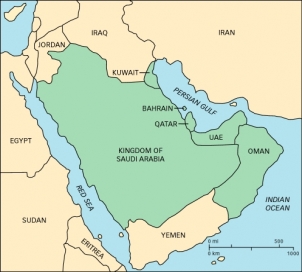
Saudi motivations are quite different, associated with a fierce regional rivalry that is articulated in terms of a sectarian clash between Shia and Sunni Islam, aggravated by a concern that Iran’s influence increased as a result of the Iraq and Syrian Wars, which both seem to have outcomes favorable to Tehran. The sectarian rationale of the conflict seems intended to disguise the more fundamental explanation, which is that there is a power struggle between these two sovereign states to determine which one will achieve regional ascendancy. The sectarian explanation was also somewhat undermined by the intensity with which the Saudis and other Gulf monarchies used their financial and diplomatic resources to crush the Muslim Brotherhood in Egypt despite its strong Sunni identity. From the time of the Iranian Revolution in 1979 Tehran looked upon the monarchy governing Saudi Arabia as corrupt and decadent in the same manner as it regarded the Shah’s dynastic rule in Iran as politically illegitimate.
Your focus on how far the U.S. can go in restricting Iran’s influence is difficult to assess at this point. Trump’s virtual repudiation of the agreement on Iran’s Nuclear Program seems to express a commitment to join with Israel and Saudi Arabia to engage in coercive diplomacy, consisting of intensifying sanctions, covert operations to encourage internal opposition, and a variety of military threats. Where this will lead, if indeed it goes forward in defiance of the other parties to the agreement and almost all UN members, is anybody’s guess, but it is a highly irresponsible diplomatic gambit that risks a deadly ‘war of choice.’
Trump’s regional diplomacy, such as it is, has been most notable for giving even greater emphasis to the ‘special relationships’ with Israel and Saudi Arabia than earlier American leaders. Even previously, under Obama, George W. Bush, and prior presidents, the subordination of American strategic interests and national values to this posture of unquestioning support, which is the operational significance of designating these links as special relationships.
CJP: Syria’s civil war not only continues unabated but the country has become a battlefield for the spread of the influence of various powers in the region, including Turkey and Russia. Do you see a way out of this mess?
Richard Falk: The Syrian War is among the most complex conflict patterns in the history of warfare. Not only is there an internal struggle for control of the Syrian state that has been waged by not one, but by several insurgent movements that are not even compatible with one another. There is also a regional proxy war pitting Saudi Arabia, UAE, and Qatar against Iran, with Turkey playing a confusing role that sometimes seems guided by anti-Damascus goals but at other times is preoccupied with curtailing the Kurdish challenge. The various national struggles of the Kurds for autonomous rights, possibly independent political communities, threatens the territorial integrity of several Middle Eastern states, as well as Syria. In addition to all of this there are major multi-faceted and fluid Russian and American involvements on opposite sides, although not even this opposition is clear cut and consistent. For a time there was an almost collaborative effort to defeat ISIS and obtain a Syrian ceasefire, although the basic involvement has been to put Russia on the side of the Damascus government and the U.S. as aligned with the insurgencies.
Because the anti-ISIS dimension of the conflict is at odds with the anti-Damascus dimension, depending on the priority accorded to one rather than the other, alignments are contradictory and shifted over time. Sometimes precedence has been given to achieving regime-change in Damascus by removing Assad from power, and in such contexts, it was acknowledged silently that ISIS was the most effective military challenge on the ground being mounted against the Syrian government. At other times, the counterterrorist campaign against ISIS was given uppermost prominence, and there was even high-level indications that Washington was willing to live with the Assad regime, a position given added credence recently due to the success of the Syrian government in quelling its opposition, making continued opposition futile politically and irresponsible ethically. Whenever pragmatism gained the upper hand, Russia and Iran were accepted as partners in these efforts to defeat and destroy ISIS.
All wars eventually come to an end, and I am sure Syria will not be an exception. Yet it difficult at present to project a solution that brings about more than a ceasefire, and even this kind of ending of what has become an orgy of senseless killing is highly elusive, as each of the many parties to the conflict jockeys violently for minor positional advantages to improve its bargaining leverage when the conflict enters some kind of negotiating phase. Although all wars end eventually, internal wars of this kind, especially with such complex regional and international aspects, can simmer for decades with no clear winner or loser as has been the case in the Philippines and Colombia. It seems as if at present the Syrian government believes it is on the verge of victory, and is pressing for an outcome in East Ghouta and Idlib such that it will not be expected to make significant concessions.
The best hope, which has been the case for several years, is that the various parties will recognize that the situation is indeed a mess that is causing mass suffering and widespread devastation without producing political gains. Yet translating that recognition into a formula that produces an end to the violence has so far proved futile and frustrating as each party sees the conflict from its partisan perspective of gain and loss.
CJP: With the two-state solution having ceased long ago being a viable alternative, what are the most likely prospects for the future of Israeli-Palestinian relations?
Richard Falk: The safest response is to anticipate a persistence of the present status quo, which involves continuing Israeli expansionism by way of the settlements and the persistence of the Palestinian ordeal, with some resistance in the occupied West Bank, Gaza, and East Jerusalem and a growing global solidarity movement exerting pressure on Israel in the form of the BDS campaign. There may be some attention given to a variety of proposals to end the conflict by revived diplomacy. The Trump blustery promise of ‘a deal of the century’ has received skeptical attention, but its likely one-sidedness makes it almost certain to be a non-starter, especially as the Israeli government feels insufficient pressure to produce a peaceful solution based on a genuine political compromise and the Palestinian Authority remains unwilling to accept a demilitarized statelet as a token Palestine state, or even to participate in negotiations that are so obviously stacked against it. For public relations reasons, the international consensus clings to the two-state solution even though, as your question suggests, its viability has long been superseded by Israeli expansionist policies intended to fulfill the Zionist goal of making the boundaries of Israel coterminous with the whole of the Jewish biblical conception of the ‘promised land.’
There are other outcomes that are possible. Daniel Pipes has been promoting what he dubbed ‘the victory caucus,’ which posits Israel as the victor in the struggle to establish a Jewish state and Palestine the loser. Pipes argues that diplomacy has failed to resolve the conflict after years of effort, and hence that the only alternative is for one side to win and the other to lose if peace is to be established. He encourages Israel to escalate pressure on the Palestinians to make them see the light, accept the reality of a Jewish state, and move on. Such an initiative is distasteful to those who support the Palestinian struggle, and it seems oblivious to the claims of international law and international morality as these are generally understood in the 21st century when colonialism and ethnic nationalism are illegitimate forms of political control and the right of self-determination has become universally accepted as an inalienable right of an oppressed people in the circumstances of the Palestinians.
In my view, neither the two-state nor a consensual one-state outcome of the struggle is currently within the realm of political feasibility. We are necessarily speculating about future political scenarios within the domain of ‘political impossibility.’ Yet the impossible sometimes happens. Colonialism was successfully challenged, the Soviet Union collapsed, South Africa renounced apartheid, the Arab Spring erupted. In none of these cases did such occurrences seem possible except in retrospect. After the events, as expected, experts appeared who explained why these impossible developments were, if closely considered, inevitable.
In this spirit, I think it useful to acknowledge the limits of rational assessment, and either remain silent, or offer for consideration, a solution that is ‘impossible,’ yet ‘desirable’ from the perspective of humane values, which in this case involves a secure, equitable, and sustainable peace for both peoples that is, above all, sensitive to their equality and to their distinct, yet legitimate, claims to self-determination. I find it unimaginable to realize such a peace within the current structure of the Middle East, which consists of a group of artificial and autocratic states held together by varying mixtures of coercion, corruption, and external military assistance. Israel/Palestine peace cannot unfold in a benevolent manner without a structural return to the Ottoman framework of regional unity and ethnic community, and possibly Islamic caliphate, adapted to post-colonial realities. Such a stateless Middle East would reverse the harm inflicted on the region by the imposition of European territorial states through the infamous Sykes-Picot diplomacy.
CJP: South Africa’s former apartheid system has been employed analytically by many to describe the current status of the state of Israel with regard to it’s treatment towards Palestinians. Indeed, it is from such a comparison that the Boycott, Divestment and Sactions (BDS) movement was borne, but to what extent are the two cases compatible? South Africa was pretty much isolated by the early 1980s, but the same cannot be said about Israel today. In fact, Israel has even managed to expand recently it’s network of allies with Greece and the Sunni states. So, what are your thoughts on the comparison between the former South African apartheid regime and Israel and the effectiveness of the strategy of BDS?
RF: Your question raises two distinct issues: Is Israel responsibly regarded as an ‘apartheid state’? If so, is Israeli apartheid similar to South African apartheid?
Prior to responding to these questions, it seems helpful to clarify the status of the international crime of apartheid as it has evolved in international law, taking particular note of the fact that although the name and core idea is based on the specific condemnation of South African racism, the international crime is detached from this precedent. The essence of the international crime is any form of discriminatory domination by one race over another that relies on ‘inhuman acts’ to sustain its purposes. In this important sense, Israeli forms of domination over the Palestinian people may be quite different than the domination of whites over blacks in South Africa and yet constitute the international crime of apartheid. Treating apartheid as an international crime is based both on the 1973 International Convention on the Suppression and Punishment of the Crime of Apartheid and on the 2002 Rome Statute governing the operations of the International Criminal Court that categorizes ‘apartheid’ in Article 7 as one of eleven types of Crime Against Humanity.
In a study commissioned by the UN Economic and Social Commission, Virginia Tilley and I concluded that the policies and practices of Israel toward the Palestinian people as a whole satisfy the requirements of the international crime of apartheid. Our conclusion is based on the view that Israel, to maintain an expanding Jewish state has subjected the Palestinian people to structures of subjugation and victimization that are sustained by excessive violence and other inhuman means. It was our judgment that Jews and Palestinians are distinct ‘races’ as the term is understood in international law. The scope of Israeli apartheid is based on coherent strategies designed to subjugate the Palestinian people whether they are living under occupation, the most obvious case, or as a discriminated minority within Israel or as residents in refugee camps in neighboring countries or living is a global diaspora as involuntary exiles. Each of these domains is connected with the Israeli efforts to ensure not only the prevalence of a Jewish state, but also a secure Jewish majority population that could only be achieved by a process of dispossession, dispersion, and fragmentation, as well as by the denial of any right of return.
South African apartheid was very different in its operation as compared to Israeli apartheid. For one thing, white South Africa was a minority demographic in the country and critically dependent on black labor. For another, the South African concept of law, citizenship, and democracy was delineated along racial lines, while Israel claims to be an inclusive democracy, although is more accurately understood to be an ethnocracy. Despite these fundamental differences, the core reality of ‘inhuman acts’ and ‘discriminatory structures of domination’ are present, although distinctly enacted, in both national settings.
Finally, it should be understood that such allegations of Israeli apartheid are made on the basis of academic study, and while they may be persuasive morally and politically, it is also true that until a valid tribunal passes judgment on such allegations, the legal status of the allegations remains unresolved, and is of course feverishly contested by Israel and its supporters.
CJP: Overall, what are the prospects for restored stability and a positive future for the countries in the Middle East?
RF: Without the intervention of unanticipated developments, the prospects are poor. On one level, the extreme turmoil in countries such as Syria, Yemen, Iraq, and neighboring Libya are likely to continue and could spread to additional states. On a second level, the regional rivalries between Iran and a Saudi led coalition on the one side and Israel on the other, seem likely to intensify. On a third level, there is no plausible scenario for establishing a sustainable peace between Israel and the Palestinian people. On a fourth level, with the reassertion of Russian engagement and the U.S. pursuit of a strategic agenda related to Israel, oil, political Islam, Iran, and nuclear nonproliferation, the region has as in the Cold War become a site of dangerous geopolitical maneuver and confrontation. On a fifth level, perhaps less serious than the others, is the sort of intra-regional tensions that have given rise to the Gulf Crisis centered upon the relations of Qatar to other Gulf countries, and to the role of Turkey as partner and antagonist, especially in relation to the continuing search of the Kurdish peoples for self-determination. Finally, on a sixth level, there is almost certain to be new expressions of internal strife and various extremisms that strike against the West, inviting retaliation, which will probably be accompanied by further migratory flows that aggravate relations between the Middle East and Europe.
The drastic and prolonged victimization of the Middle East also exhibits the failure of the West to understand, much less address, the root causes of conflict and chaos that have produced mass suffering and material deprivations throughout the region. These root causes can be traced back at least a century to the imposition of European style states on the region, reflecting colonial ambitions, in the aftermath of World War I and by way of a colonial pledge to the world Zionist movement to support the establishment of a Jewish homeland in Palestine, then inhabited by a Jewish minority not larger than 6%. The other principal root cause related to the abundance of oil in several parts of the Middle East, which created rentier mentalities in development contexts and provided strong strategic motivations for intervention and control by global political actors.
In the end, this complexity joining the historical past to the tormented past creates a dismal set of prospects for the future of the Middle East. At this point, only paradoxical, although unrealistic, hopes for prudence and moderation can make the portrayal of the situation less gloomy than the evidence and trajectory suggest.
**********************************************************************************
After the Interview: A Postscript on the Land Day Massacre (‘Great March of Return’)
The precise statistics remain inconclusive, although there exists general agreement that more than 15 Palestinians were killed by live ammunition fired by Israeli snipers stationed at the border with Gaza, another estimated 750 Palestinians were injured by ammo and rubber bullets resulting in an estimated total of 1,500 injuries, including from tear gas dropped on the largely unarmed demonstration. Whether the Israeli behavior should be viewed as ‘excessive force’ or ‘collective punishment,’ or both, is a matter for debate, but there is no question that the killings and firepower were in direct conflict with Israel’s obligations as an Occupying Power as specified in the Fourth Geneva Convention. Israel’s ‘disengagement’ in 2005 did not end the occupation from the perspective of international humanitarian law, but rather rearranged its management, with control and deployments being concentrated on the borders rather than throughout Gaza, and reinforced by periodic massive military incursions causing large numbers of civilian casualties and widespread devastation.
This latest interaction returned the Palestinian litany of grievances to the front pages of the world’s media often accompanied by gruesome pictures, but also revealed two kinds of gaps: between the Western and non-Western media and between the mainstream media response and that of civil society. The mainstream media worries that this is a public relations setback for Israel and urges restraint on both sides. In contrast, the activist segment of civil society condemns the Israeli tactics as constituting a massacre, and calls for an arms embargo. This distinction at the level of response is revealing, with the mainstream and almost every Western government pinning their public hopes on reviving negotiations aiming at a political solution based on the establishment of a sovereign and independent Palestine. Engaged civil society has lost all faith in diplomacy under current conditions, believes only escalating nonviolent pressure can change the political climate sufficiently to make negotiations sufficiently promising to undertake, and then only if the two-state mantra is abandoned once and for all.
Tags: BDS Campaign, Great March of Return, Iran, Israel/Palestine, Jerusalem, Land Day, peace process, Saudi Arabia, Trump, Two-State Solution



 Global Justice in the 21st Century
From Counterterrorism to Geopolitics: Reviving the U.S. Deep State
25 Dec[Prefatory Note: The challenge of transnational non-state violence, what the media dutifully criminalizes as ‘terrorism’ while whitewashing the abuses of state and state-sponsored violence as ‘counterterrorism’ or exercises of every state to act in self-defense. Language matters as those who wanted to sugarcoat ‘torture’ by such phrases as ‘enhanced interrogation.’ The pendulum of U.S. foreign policy is swinging back in the direction of geopolitical confrontation, given the prospects of the Biden presidency. Although it is the highest political priority to be done with Trump and Trumpism, the renewal of ‘bipartisan foreign policy’ under the guidance of the American version of the deep state is not good news. It could mean a new cold war tilted toward China, but with different alignments, possibly including Russia, filled with risk and justification for continuing overinvestment in a militarized approach to national security causing a continuing underinvestment in human security, exposing the root cause of American imperial decline. The post below addresses some of these issues, and was published in the Tehran Times (17 Dec 2020).]
From Counterterrorism to Geopolitics: Reviving the U.S. Deep State
There exists a basic split between those political actors that seek to define ‘terrorism’ as anti-state violence by non-state actors and those actors that seek to define terrorism as violence directed at innocent civilians, regardless of the identity of the perpetrator. The latter approach to the definition reaches targeted or indiscriminate violence directed at civilians even if the state is the perpetrator. States that act beyond their borders to fulfill counterrevolutionary goals seek to stigmatize their adversaries as terrorists while exempting themselves from moral and legal accountability.
There exists a second basic split due to state practice following political rather than legal criteria when identifying terrorist actors. When the Taliban and Al Qaeda were opposing Soviet intervention in Afghanistan they were identified as Mujahideen, but when seen as turning against the West, they were put on the top of the terrorist list. Osama Bin Laden, once hailed as a Western ally deserving lavish CIA support became the most wanted terrorist after the 9/11 attacks on the World Trade Center and Pentagon. Such subjectivity and fluidity makes it virtually impossible to develop a coherent and legal approach to ‘terrorist’ activity.
In essence, geopolitical actors have always sought to have international law regard the use of force by states acting on their own as falling outside the framework of terrorism while regarding transnational political violence by adversary or enemy non-state actors as terrorism even if the targeted person or organization is a government official or member of the armed forces, or if the non-state actor is resisting occupation by foreign armed forces. Before the 9/11 attacks Israel adopted influentially adopted this approach in its effort to portray Palestinian resistance as a criminal enterprise. After 9/11 the United States added its political weight to this statist approach to the conception of terrorism, which meant in effect that any adversary target that could be characterized as associated with a non-state actor that resorted to armed struggle was criminalized to the extent of being treated as unprotected by international humanitarian law. In practice, this subjectivity was vividly displayed in recent years by support given to anti-Castro Cuban exiles that engaged in political violence against the legitimate Cuban government, and yet were given aid, support, and encouragement while based in the United States.
The UN was mobilized after the 9/11 attacks by the United State to support this statist/geopolitical approach to political violence, which possessed these elements, and given formal expression in a series of Security Council Resolutions, including 1373, 1535:
–terrorists are individuals who engage in political violence on behalf of non-state actors;
–states, their officials and citizens may be guilty of supporting such activities through money, weapons and safe haven, and therefore indictable under national law as aiding and abetting terrorism;
–political violence by states, no matter what its character, is to be treated by reference to international law, including international humanitarian law, and not viewed as terrorism;
–even if the non-state actor is exercising its right of resistance under international law against colonialism or apartheid, its political violence will be treated as ‘terrorism’ if such a designation furthers geopolitical ambitions.
The alternative view of terrorism that I endorse emphasizes the nature of the political violence, rather than the identity of the perpetrator. As such, political violence can be identified as ‘state terrorism,’ which amounts to uses of force that are outside the framework of war and peace, and violate the sovereign rights of a foreign country or fundamental rights of citizens within the territory of the state. Such acts of terrorism may be clandestine or overt, and may be attributed to state actors when counterrevolutionary groups are authorized, funded, and encouraged directly or indirectly by the state. Non-state actors can also be guilty of terrorism if their tactics and practices deliberately target civilians or recklessly disregard risks of death or harm to civilians.
As far as I know, Iran has opposed non-state political violence of groups such as ISIS or Taliban that engage in terrorist activity by committing atrocities against civilians that amount to Crimes Against Humanity. Iran has also consistently condemned state terrorism of the sort practiced by Israel and the United States, and possibly other governments, within the region. In this regard, Iran has been active both in the struggle against non-state and state terrorism.
Iran has been accused of lending funding and material support to non-state actors that many governments in the West officially classify as ‘terrorist’ organizations, such as Hezbollah and Hamas. Part of the justification for U.S. sanctions arises from this allegation that Iran supports terrorism in the Middle East. These allegations are highly ‘political’ in character as both Hezbollah and Hamas engaged in violent resistance directed at unlawful occupation policies that denied basic national rights to the Lebanese and Palestinian people, including the fundamental right of self-determination, although some of their tactics and acts may have crossed the line of legality.
There are also contentions that Iran’s support for the Syrian government in dealing with its domestic adversaries involves complicity in behavior that violates the laws of war and international humanitarian law. This contention is a matter of regional geopolitics. As far as international law is concerned, the Assad government in Damascus is the legitimate representative of the Syrian people, and is treated as such at the UN. Iran is legally entitled to provide assistance to such a government faced with insurgent challengess from within its boundaries. If the allegations are true that Syria has bombed hospitals and other civilian sites, then the Syrian government could be charged with state terrorism.
3- How do you assess the role and position of General Ghasem Soleimani in the fight against terrorism and ISIS in the region?
Although a military officer, General Soleiman, was not in any combat role when assassinated, and was engaged in peacemaking diplomacy on a mission to Iraq. His assassination was a flagrant instance of state terrorism. With considerable irony, the truth is that General Soleiman had been playing a leading counterterrorist role throughout the region. He is thought to have been primarily responsible for the ending, or at least greatly weakening, the threat posed by ISIS to the security of many countries in the Middle East.
As suggested at the outset, without an agreed widely adopted and generally agreed upon definition of terrorism it is almost impossible to create effective international mechanisms to contain terrorism. As matters now stand, the identification of ‘terrorists’ and ‘terrorism’ is predominantly a matter of geopolitical alignment rather than the implementation of prohibitions directed at unacceptable forms of political violence within boundaries and across borders.
To imagine the emergence of effective international, or regional, mechanisms to combat terrorism at least four developments would have to occur:
–the reliance on legal criteria to categorize political violence as terrorism;
–the inclusion of ‘state terrorism’ in the official definition of terrorism;
–the inclusion of political violence within sovereign territory as well as across boundaries;
–an internationally or regionally agreed definition incorporating these three elements and formally accepted by all major sovereign states and by the United Nation.
In the present international atmosphere, such an international consensus is impossible to achieve. The United States and Israel, and a series of other important states would never agree. There are two sets of obstacles: some states would not give up their discretion to attack civilian targets outside their borders and would not accept accountability procedure that impose limits on their discretion over the means used to deal with domestic transnational non-state adversaries.
Under these conditions of geopolitical subjectivity such that from some perspectives non-state actors are ‘freedom-fighters’ and from others they are ‘terrorists,’ no common grounds for meaningful and trustworthy intergovernmental arrangements exists.
It remains important for individuals and legal experts to advocate a cooperative approach to the prevention and punishment of terrorists and terrorism by reference to an inclusive definition of terrorism that considers political violence by states and by governments within their national territory as covered.
It is also in some sense to include non-state actors as stakeholders in any lawmaking process that has any prospect of achieving both widespread acceptance as a framework or implementation at behavioral levels. It would seem, in this regard, important to prohibit torture of terrorist suspects or denial of prisoner of war rights. One-sided legal regimes tend to be rationalizations for unlawful conduct, and thus operate as political instruments of conflict rather than legal means of regulation.
Unless surprises occur, almost a probability, the Biden foreign policy will likely follow the George H.W. Approach approach more than the Obama approach, which continued to unfold as part of the aftermath to the 9/11 attacks. This means becoming again captive to the deep state’s approach to world order: global militarism, Euro-centric points of reference, predatory capitalism, and quasi-confrontational toward China, Russia.
Tags: Biden Prospects, geopolitics, Iran, state terrorism, State-sponsored Terror, Terrorism